
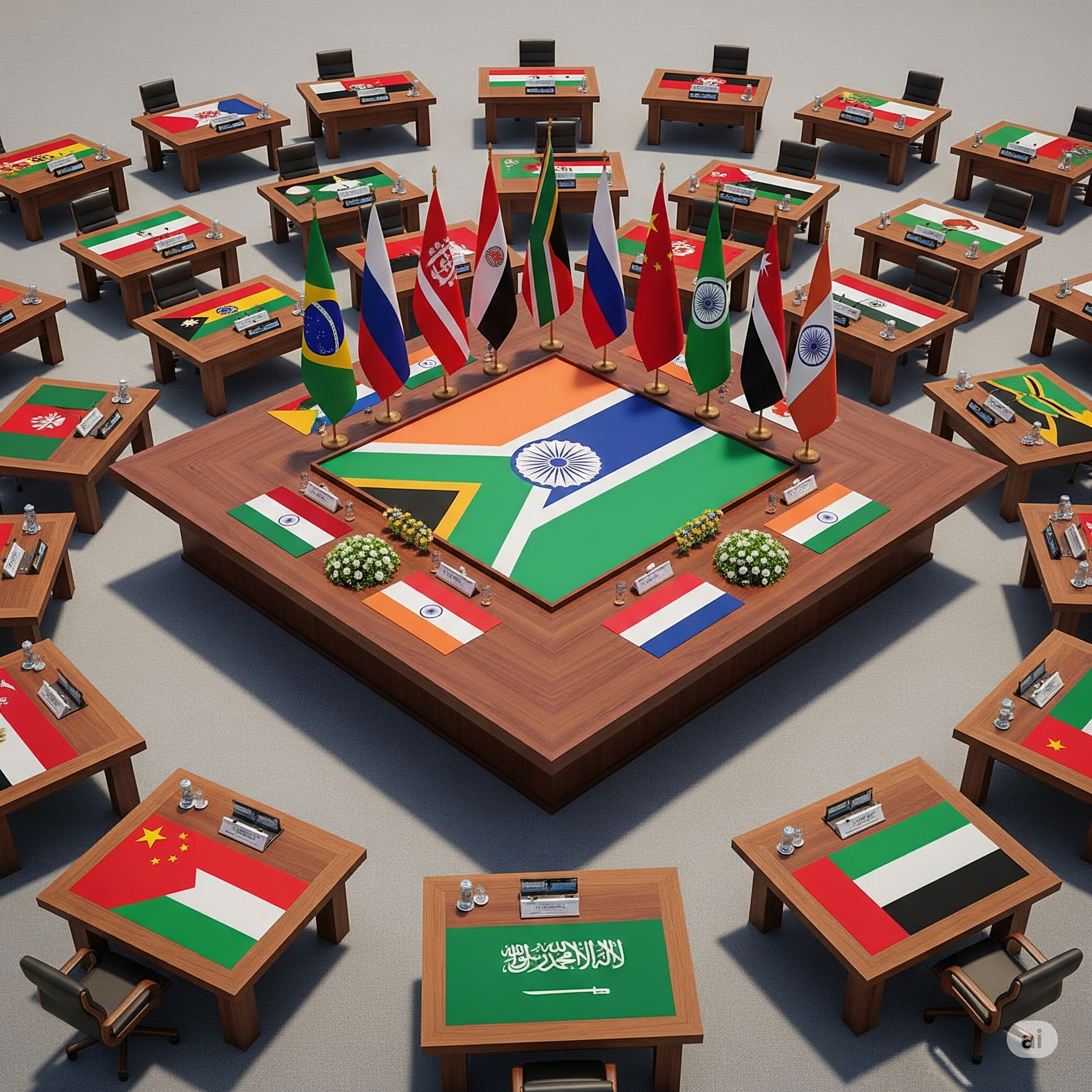
The BRICS of today bears little resemblance to the original quartet. A recent and rapid expansion has not only increased its membership but also introduced new, nuanced categories of participation, creating a multi-tiered structure that speaks to the group’s growing attraction. This evolution from an exclusive club to a more complex network of members, partners, and outreach invitees reflects a strategic effort to broaden its influence while managing the complexities of a larger, more diverse coalition.
Outline
- Partner-country tier born at Kazan 2024; nine initial entrants, Vietnam added later
- Outreach (regional) vs Plus (global) formats
- Over thirty nations courting engagement
- Implications for global governance
The core of the group consists of its eleven full members: the original five (Brazil, Russia, India, China, South Africa) plus the six new entrants from 2024-25 (Egypt, Ethiopia, Indonesia, Iran, Saudi Arabia, and the UAE). These nations participate in all meetings and hold decision-making power, which operates on the basis of consensus. This principle ensures that no single member can dominate the agenda, though it also presents challenges to swift action.
Participation Modes
| Mode | Launched by | Who Attends | Voting Rights |
| Member | Founders | 11 states | Consensus |
| Partner | 2024 mandate | 10 states | None |
| Outreach | South Africa, 2013 | Regional neighbours | None |
| Plus | China, 2017 | Global invitees | None |
Plus: 2017 saw Beijing widen the guest list beyond its region, branding the move “BRICS Plus”.
Outreach: Geography as Invitation
South Africa started the custom in 2013: invite neighbour states when you host.
A new and significant development is the creation of the “partner country” category, formalized at the Kazan Summit in 2024. This tier includes nations like Belarus, Bolivia, Kazakhstan, Malaysia, Nigeria, Thailand, Uganda, Uzbekistan, and Vietnam. Partners are generally invited to key high-level summits and can participate in other meetings by consensus, offering a pathway for deeper engagement without the full commitments of membership. This modality allows BRICS to build a wider network of allies who share its vision for a more inclusive international order. Distinguishing these formal tiers are the ad-hoc engagement formats of “BRICS Outreach,” where the host invites regional neighbors, and “BRICS Plus,” for inviting countries beyond the host’s immediate geography. This layered approach allows BRICS to calibrate its relationships, extending its reach and solidifying its role as a central hub for the Global South.