
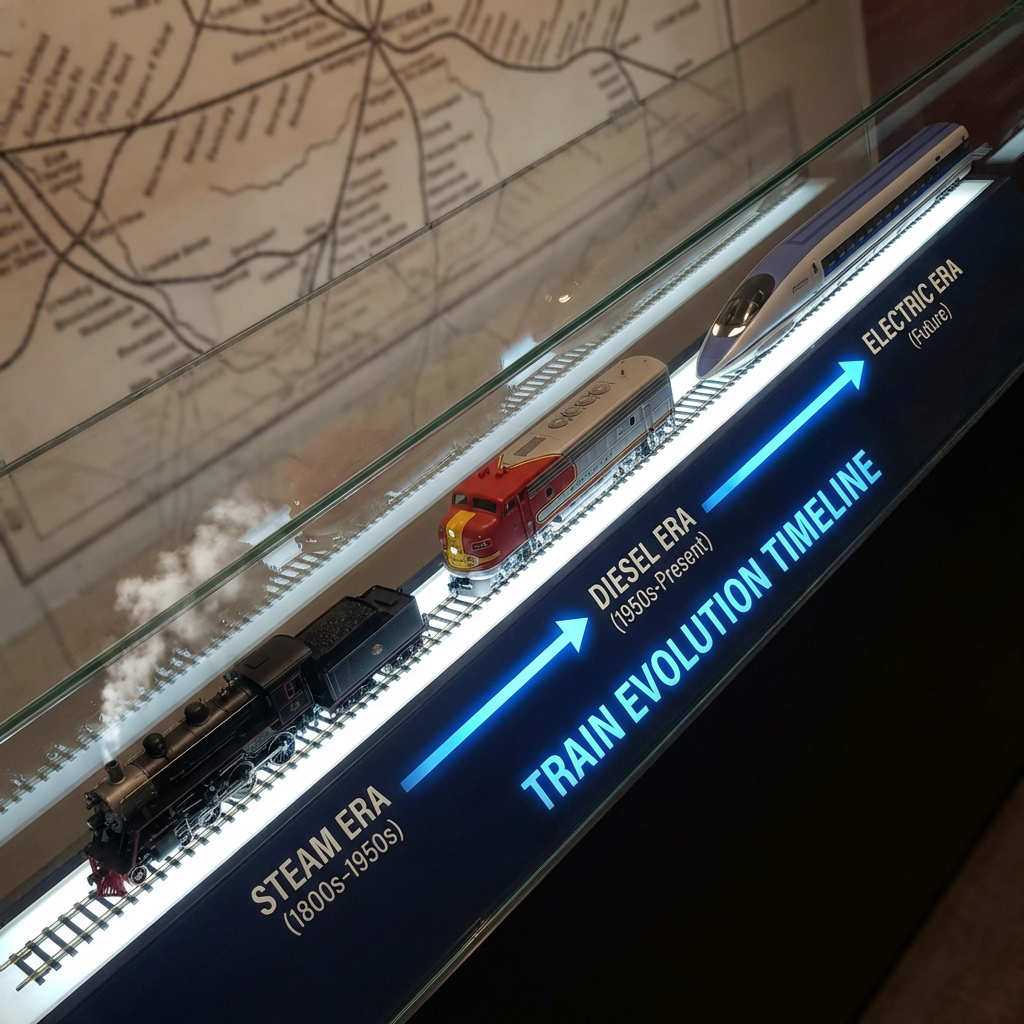
- Fuel inefficiency: Steam engines convert only ~6–10% of coal energy into motion
- High operating cost: Continuous coal + water supply needed
- Labour-intensive: Requires fireman + driver
- Maintenance-heavy: Daily servicing, frequent breakdown risk
Replaced by:
- Diesel locomotives (since 1950s)
- Electric trains (large-scale from 1960s onward)
Last Countries Where Steam Was “Mainstream”
| Country | Last Mainstream Use | Notes |
| China | ~2005 | Last major country using steam widely |
| India | 1985 | Indian Railways phased out |
| Russia (USSR) | ~1975 | Shifted to diesel/electric |
| USA | ~1960 | Early adopter of diesel |
| UK | 1968 | Full transition |
Where Steam Still Exists (But NOT Mainstream)
China (Residual / Industrial – Mostly Ended)
- Coal mine railways used steam till ~2010
- Now almost completely phased out
India (Heritage Only)
- Darjeeling Himalayan Railway
- Nilgiri Mountain Railway
Used only for tourism, not transport backbone
United Kingdom (Heritage Network)
- ~100+ preserved lines
- Operated by private heritage railways
South Africa (Limited / Tourism)
- Occasional steam freight demonstrations
- Mostly heritage operations
Global Status Today (Reality Check)
| Category | Status |
| Countries using steam as primary transport | 0 |
| Countries with any steam use | ~10–15 (heritage only) |
| Active steam locomotives worldwide | <2,000 |
| Share in global rail transport | ~0% |
Steam engines did not disappear because of age—they were economically unviable in a world demanding:
- High speed
- High frequency
- Low cost per km
Today’s rail systems (India, China, Europe) rely heavily on electric traction, not coal.
Bottom Line
Coal-powered trains are now a museum/heritage technology globally—not a working backbone in any country.