
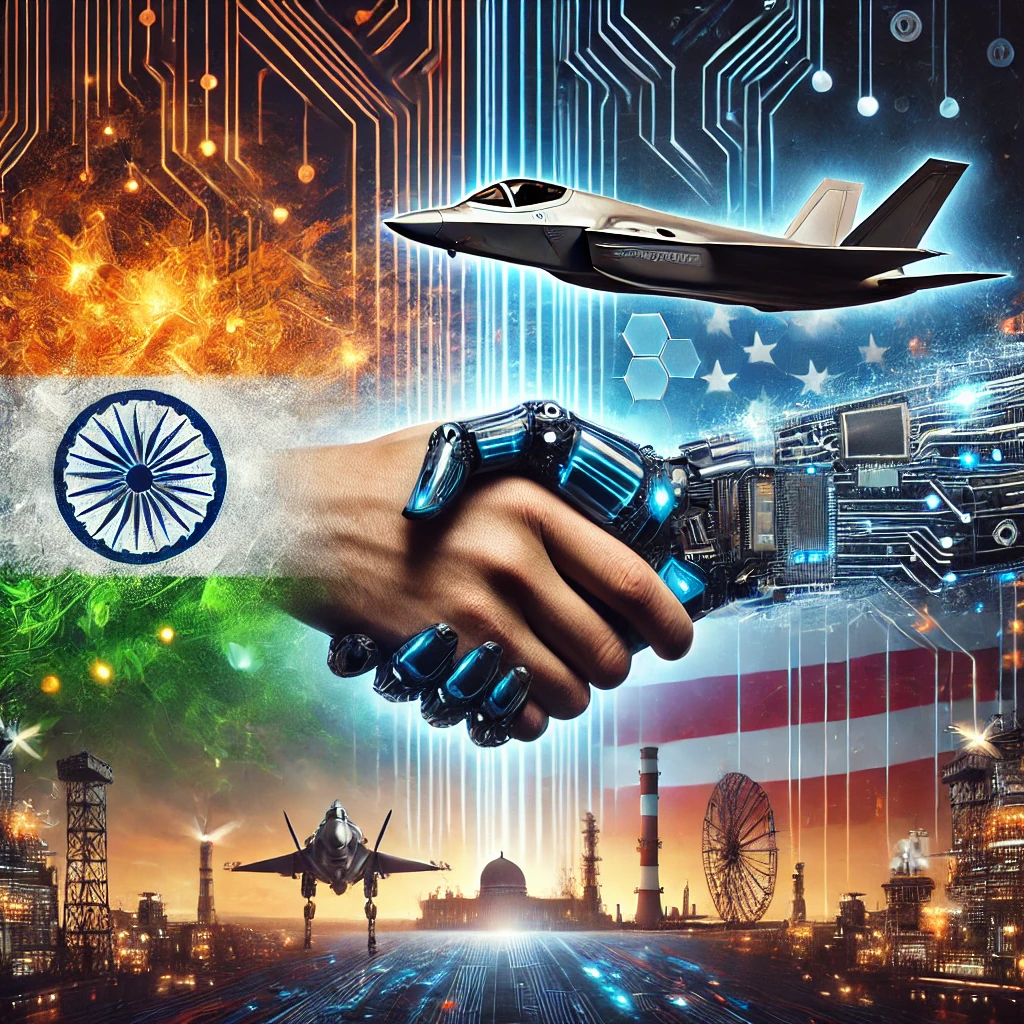
1. Overview of the Visit
- The Prime Minister of India visited the United States at the invitation of President Donald Trump.
- The visit took place within weeks of President Trump’s second-term inauguration, reflecting the significance of India-US ties.
- Discussions covered trade, defence, technology, energy security, regional issues, and strategic cooperation.
- A new blueprint was established for advancing bilateral relations across multiple domains.
2. Trade and Economic Cooperation
- Mission 500 was launched to expand bilateral trade to $500 billion by 2030.
- Both nations agreed to negotiate a multi-sector bilateral trade agreement by Fall 2025.
- The agreement aims to:
- Increase market access for both nations.
- Reduce tariff and non-tariff barriers.
- Strengthen supply chain integration.
- India pledged over $7 billion in investments in key US industries, including steel and pharmaceuticals.
- A commitment to resolving trade frictions and reducing the US trade deficit was also made.
3. Defence and Security Cooperation
- The US-India Major Defence Partnership was extended through a new 10-year framework (2025-2035).
- Agreements on defence procurement and co-production were finalised.
- The US agreed to review its arms transfer regulations to facilitate smoother technology exchange.
- F-35 fighter jets: The US committed to initiating discussions on the sale of F-35s to India, marking a new era in India’s military capabilities.
- A Reciprocal Defence Procurement Agreement was proposed to enhance military hardware exchanges.
- The Autonomous Systems Industry Alliance was launched to boost cooperation in next-generation defence technologies, particularly underwater domain awareness.
4. Technology and Innovation Collaboration
- The US-India TRUST Initiative (Transforming the Relationship Utilizing Strategic Technology) was introduced.
- Focus areas include:
- Artificial Intelligence (AI)
- Semiconductors
- Quantum computing
- Biotechnology
- Space research
- A new US-India roadmap on AI infrastructure is set for completion by the end of 2025.
- The Indus Innovation Platform was launched to strengthen cooperation in space and energy sectors.
- Efforts to streamline technology transfer and reduce export control barriers were agreed upon.
5. Energy Security and Sustainability
- India will increase purchases of US energy, potentially reaching $25 billion in the near future.
- Both countries will collaborate to:
- Ensure global energy price stability.
- Strengthen hydrocarbon production and trade.
- Agreements were signed for building US-designed nuclear reactors in India.
- Small Modular Reactors (SMRs) were highlighted as a key area for future cooperation.
- The Strategic Mineral Recovery Initiative was launched to enhance critical minerals collaboration.
6. People-to-People and Education Collaboration
- Currently, 300,000 Indian students are studying in the US, significantly contributing to the US economy.
- Both nations committed to strengthening higher education collaborations.
- India invited US universities to establish offshore campuses in India.
- Agreements were made to streamline legal mobility for:
- Students
- Professionals
- Short-term business and tourist visas
- Enhanced efforts were agreed upon to combat illegal immigration and human trafficking.
7. Regional and Global Cooperation
- India will host the Quad Summit later this year, with President Trump invited as a guest.
- Both leaders reaffirmed commitments to:
- The Indo-Pacific strategy for regional stability.
- The IMEC Initiative (India-Middle East-Europe Corridor).
- The I2U2 Construct (India, Israel, UAE, US collaboration).
- A new Indian Ocean Strategic Venture was launched to:
- Strengthen regional trade and connectivity.
- Enhance maritime security cooperation.
8. Trade Deficit and Tariff Issues
- President Trump raised concerns about high tariffs on American goods, including automobiles.
- India agreed to initiate discussions to reduce tariff-related tensions.
- Increased energy purchases from the US were cited as a way to address the trade deficit.
- Negotiations on a comprehensive trade agreement will begin in 2025 to resolve trade frictions.
9. Extradition and Law Enforcement Cooperation
- The US confirmed the extradition of Tahawwur Rana to India.
- India has submitted additional extradition requests for individuals involved in financial and security-related crimes.
- Both countries agreed to:
- Increase intelligence sharing.
- Strengthen joint law enforcement efforts.
- Take strong action against elements threatening national security.
10. Key Takeaways and Future Outlook
- The visit reaffirmed India and the US as natural partners in defence, trade, technology, and regional stability.
- Agreements signed during the visit lay a strong foundation for long-term bilateral cooperation.
- The roadmap for economic growth, military modernisation, and technological leadership was clearly outlined.
- Both nations expressed confidence in overcoming trade frictions through a structured negotiation process.
- The commitment to Quad, Indo-Pacific stability, and regional engagement underscores India’s growing global leadership.