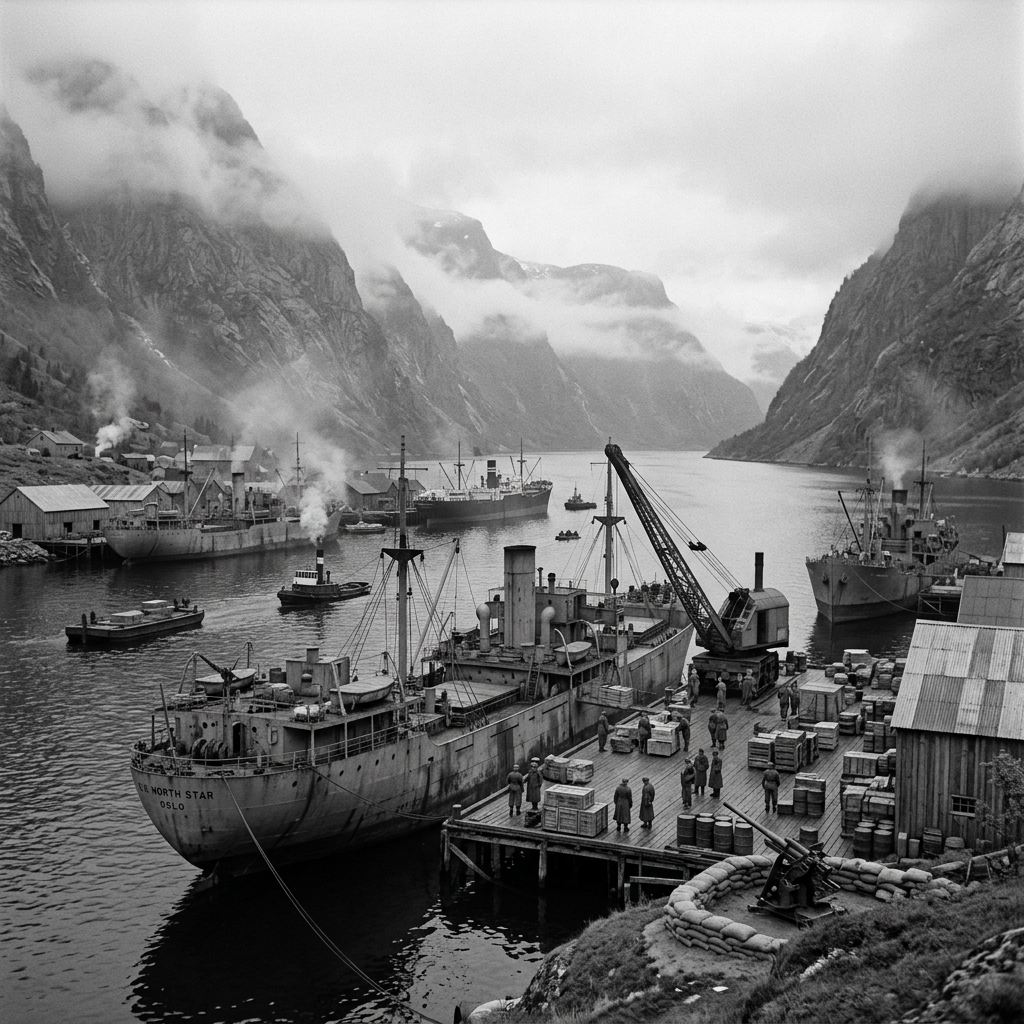
India–Norway people-to-people ties carry a distinctive maritime memory. During the Second World War, 1,053 Indian seafarers were employed in the Norwegian merchant navy, and 94 of them lost their lives. That chapter gives the relationship a human depth often missed in conventional diplomatic summaries.
The modern Indian community in Norway is around 30,000. It includes older migrant families, professionals from the IT and oil-and-gas sectors, students, faculty members, entrepreneurs and cultural organisers. More than 40 Indian associations operate in Norway, and events such as Turbandagen and the Oslo Colour Festival have become important public expressions of Indian identity.
Education, research, Arctic science, healthcare and academic exchange add another layer. India’s Arctic research station Himadri in Svalbard, Norwegian university collaborations with India and research mobility between institutions all show that people-to-people relations are no longer confined to the diaspora alone.
The Connect
Wartime memory: During the Second World War, 1,053 Indian seafarers served in the Norwegian merchant navy.
Human sacrifice: Ninety-four Indian seafarers lost their lives while serving on Norwegian merchant vessels during the war.
Early migration: More than 1,000 Indians came to Norway in the late 1960s and early 1970s, especially from Punjab.
Work profile of early migrants: Many early Indian migrants worked in factories and agricultural fields.
New migration wave: From the late 1990s onwards, Indian migration to Norway was driven mainly by IT and oil-and-gas professionals.
Current community size: The Indian community in Norway is around 30,000.
Student and faculty presence: Norway has a sizeable number of Indian students and faculty members in different universities.
Associational strength: More than 40 Indian associations are active in Norway.
Cultural events: Turbandagen and Oslo Colour Festival are two of the most popular Indian community-linked cultural events in Norway.
Turbandagen: Turbandagen has been organised since 2010.
Oslo Colour Festival: Oslo Colour Festival has been held since 2022.
E-visa access: Norway was included in India’s e-visa scheme in 2014.
Diplomatic visa facilitation: Diplomatic passport-holders are exempt from visa requirement for official meetings under an agreement signed in October 2014.
Visa numbers: India issued 11,626 visas in 2025 compared with 11,425 visas in 2024.
Education agreements: India and Norway have signed agreements covering education, higher education, academic research, faculty exchange and student exchange.
Panorama strategy: Norway included India in its higher education and research cooperation strategy, Panorama, for 2016–2020.
Extended education focus: The Panorama strategy was extended for 2021–2027.
University engagement: Rectors of Norwegian universities regularly visit India to renew collaborations.
CSIR link: Academic and research activity increased after the DG, CSIR visit to Norway in March 2024.
Healthcare exchange: Nurses from both health systems have undertaken exchange visits to understand critical care treatment.
Maternal and child health: The Norway–India Partnership Initiative has pilot projects in Bihar, Odisha and Madhya Pradesh.
Arctic research bridge: India’s Himadri station in Svalbard gives the relationship a rare polar research dimension.
Indian Community in Norway: Key Facts
Indicator
Figure / Detail
Meaning
Indian seafarers in Norwegian merchant navy during World War II
1,053
Shows an early and moving human link.
Indian seafarers who lost their lives
94
Gives the relationship a solemn historical memory.
Early Indian migrants in late 1960s and early 1970s
More than 1,000
Mostly from Punjab, working in factories and agriculture.
Current Indian community
Around 30,000
Shows the present size of the Indian presence in Norway.
Indian associations
More than 40
Reflects organised community life.
Popular cultural events
Turbandagen and Oslo Colour Festival
Public celebration of Indian identity and culture.
Visas issued in 2024
11,425
Indicates continuing people movement.
Visas issued in 2025
11,626
Shows a slight rise in India-linked mobility.
Education and Research Relations
Area
Detail
Explainer
Higher education cooperation
India and Norway have signed MoUs on education and research.
Provides a formal framework for academic links.
Faculty exchange
Agreements cover exchange of faculty between universities.
Encourages institutional and academic mobility.
Student exchange
Agreements cover student exchange between universities.
Supports long-term people-to-people contact.
Panorama strategy
India included in Norway’s strategy for higher education and research cooperation for 2016–2020.
Placed India in Norway’s structured academic outreach.
Extended Panorama period
Extended for 2021–2027.
Shows continuity in Norway’s academic engagement with India.
CSIR visit
DG, CSIR visited Norway in March 2024.
Increased collaborative activity.
Norwegian university visits
Rectors of Norwegian universities regularly visit India.
Keeps university partnerships active.
Arctic research
Himadri research station at Ny-Ålesund, Svalbard.
Makes Norway central to India’s polar research presence.
Winter expedition
India began winter expedition at Himadri from December 2023.
Made India’s Svalbard presence year-round from 2024.
Research themes
Biological, glaciological and atmospheric sciences.
Shows the scientific scope of India’s Arctic work.
Cultural and Social Cooperation
Area
Detail
Importance
Culture agreement
India and Norway have signed cultural cooperation agreements.
Gives official support to cultural engagement.
Community organisations
More than 40 Indian associations operate in Norway.
Keeps Indian identity socially visible.
Turbandagen
Popular cultural event since 2010.
Reflects Sikh and Indian community visibility.
Oslo Colour Festival
Popular event since 2022.
Adds a wider public celebration of Indian culture.
Migration history
Early migrants from Punjab worked in factories and farms.
Gives the community a working-class historical root.
Professional migration
Later arrivals were mainly IT and oil-and-gas professionals.
Shows the modern skill-based character of the diaspora.
Healthcare exchange
Nurses from both systems visit each other.
Adds practical human-sector cooperation.
Maternal and child health
Pilot projects in Bihar, Odisha and Madhya Pradesh.
Connects Norwegian cooperation with public health outcomes in India.
Visa facilitation
E-visa and diplomatic passport arrangements.
Supports mobility and official contact.
India–Norway Timeline
Year / Period
Political Track
Economic / Strategic Track
Cultural / People Track
1947
Bilateral relations established.
—
Norway recognised India early.
1952
Norway opened Embassy in India.
Fisheries Project in Kerala began around this phase.
—
1957
India opened Embassy in Norway; PM Nehru visited Norway.
—
—
1983
PM Indira Gandhi visited Norway.
—
—
1986
Crown Prince Harald visited India.
—
—
Late 1960s–early 1970s
—
—
More than 1,000 Indians, especially from Punjab, migrated to Norway.
2006
Crown Prince Haakon visited India.
—
—
2008
—
Himadri Arctic research station set up in Svalbard.
Scientific exchange gained polar depth.
2013
India became Arctic Council Observer.
Arctic cooperation gained strategic relevance.
—
2014
President Pranab Mukherjee visited Norway.
Diplomatic passport visa exemption agreement signed.
Norway included in India’s e-visa scheme.
2015
Norway opened Consulate in Mumbai.
Commercial and consular presence expanded.
—
2018
India–Nordic Summit in Stockholm.
—
—
2019
PM Erna Solberg visited India.
Blue Economy Joint Task Force established.
—
2022
Second India–Nordic Summit in Copenhagen.
—
Oslo Colour Festival began.
2023
—
India began winter expedition at Himadri from December.
India’s Svalbard presence moved towards year-round continuity.
2024
PM Modi met PM Jonas Gahr Støre at G20 Rio.
India–EFTA TEPA signed.
11,425 visas issued.
2025
Norwegian FM visited India for Raisina Dialogue.
TEPA entered into force; SDHI–Rederiet Stenersen tanker LoI signed.
11,626 visas issued.
2026
FOC held in Oslo; Finance Minister visited Norway.
Economic dialogue deepened.
Education, research and diaspora ties remained active.