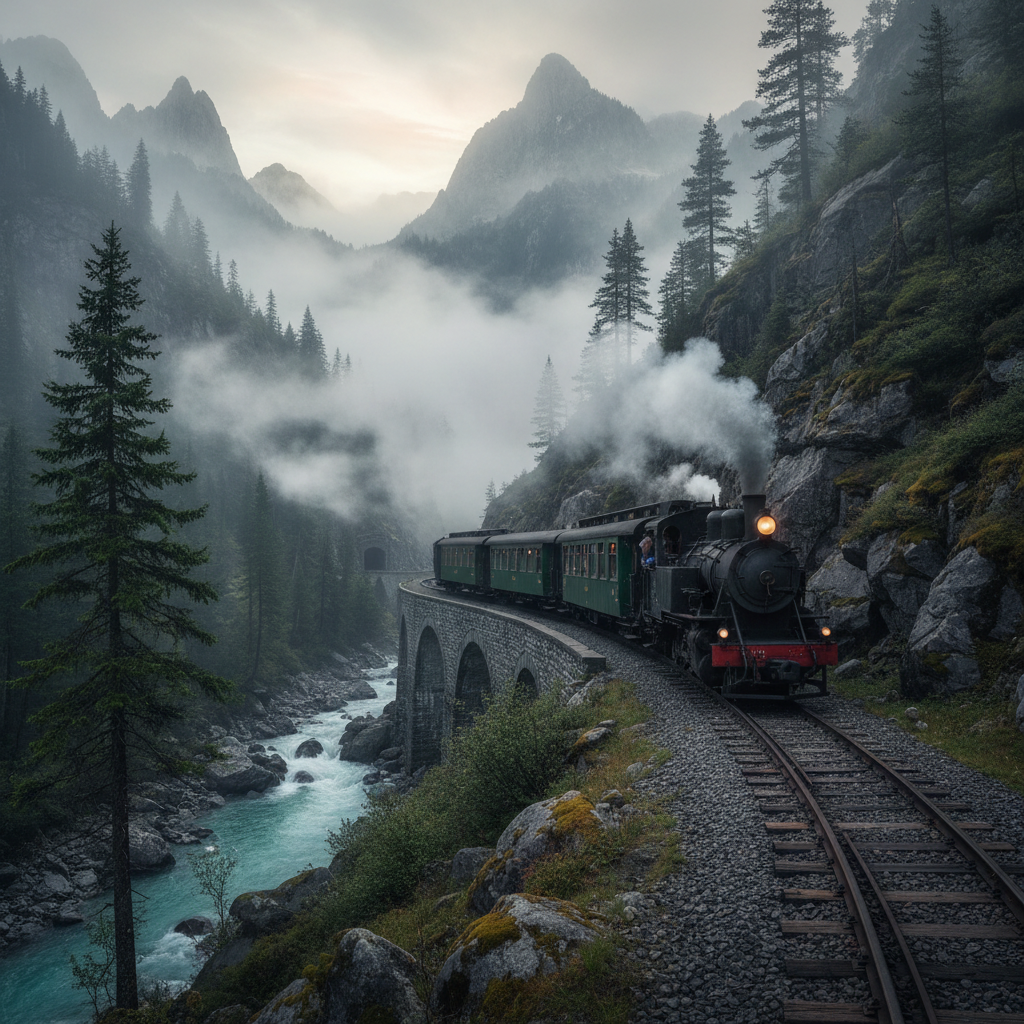
Timeline
| Year | Milestone |
| 1853 | First train (Bombay–Thane), steam-powered |
| 1900–1940 | Expansion; imported + early standard designs |
| 1947–1960s | Peak era; WP, WG dominate |
| 1970 | Steam production stops |
| 1985 | Last regular mainline steam service |
| 1995 | Final withdrawal of WP class |
| Today | Heritage/tourism use only |
Main Steam Classes (India)
| Class | Year | Gauge | Role | Power | Speed |
| WP | 1947 | Broad | Passenger | ~2,500 hp | 110 km/h |
| WG | 1950 | Broad | Freight | ~2,800 hp | 80 km/h |
| YP | 1947 | Metre | Passenger | ~1,500 hp | 80 km/h |
| YG | 1947 | Metre | Freight | ~1,600 hp | 65 km/h |
Operated by Indian Railways
Capacity Snapshot
| Type | Typical Load |
| Passenger (WP) | 10–15 coaches |
| Freight (WG) | 2,000–3,500 tons |
| Metre gauge | 500–1,500 tons |
Peak Numbers
- Total steam locomotives (India peak): ~8,000–10,000
- Share in traction (1950s): ~90% of trains
End of Steam (India)
| Event | Year |
| Last regular service | 1985 |
| Final WP phase-out | 1995 |
Surviving Steam Today
- Darjeeling Himalayan Railway
- Nilgiri Mountain Railway
- Fairy Queen
One-Line Summary
Steam built Indian Railways → peaked post-Independence → replaced by diesel/electric → survives only as heritage.
Like this:
Like Loading...
Related