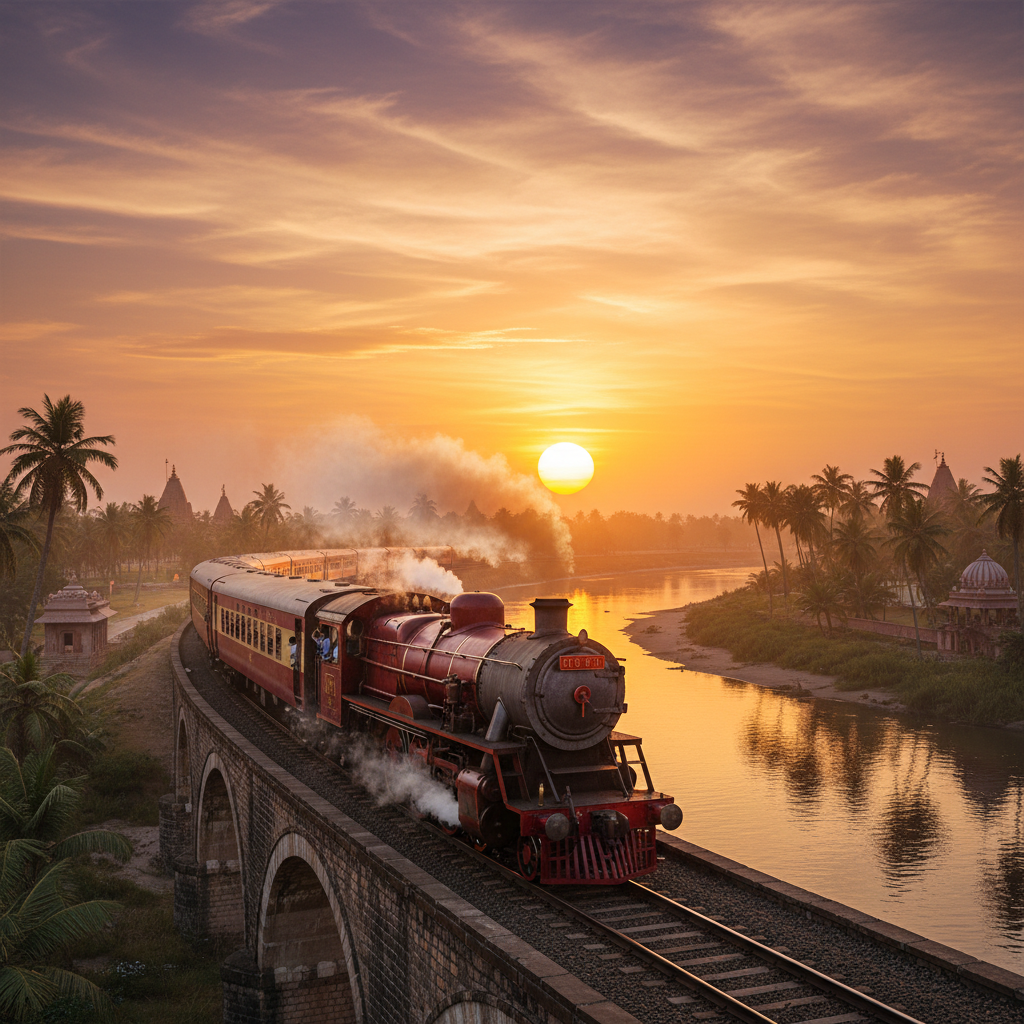
Early Era (1853–1900) – Imported Foundations
| Class / Type | Period | Origin | Key Specs | Notes |
| EIR / GIPR early engines | 1853–1870s | UK-built | Speed: ~30–40 km/h | First engines (e.g. Sindh, Sahib, Sultan) |
| F Class | 1870s–1900 | UK | Light passenger | Used on early broad gauge |
- Operated under companies like East Indian Railway, Great Indian Peninsula Railway
- Fully imported technology from Britain
Standardisation Era (1900–1947)4
| Class | Introduced | Gauge | Role | Power | Speed | Notes |
| WP | 1947 | Broad | Passenger | ~2,500 hp | 110 km/h | Flagship passenger engine |
| WG | 1950 | Broad | Freight | ~2,800 hp | 80 km/h | Heavy goods trains |
| YP | 1947 | Metre | Passenger | ~1,500 hp | 80 km/h | Widely used |
| YG | 1947 | Metre | Freight | ~1,600 hp | 65 km/h | Rural freight backbone |
👉 Managed eventually under Indian Railways after 1951 nationalisation.
Peak Steam Era in India (1947–1970)
📊 Scale & Numbers
- Total steam locomotives (peak): ~8,000–10,000 units
- Share of traction: ~90% of trains in 1950s
- Daily freight haul: backbone of coal, steel, agriculture
⚙️ Operational Capacity
| Class | Typical Load |
| WP | 10–15 passenger coaches |
| WG | 2,000–3,500 tons freight |
| YP/YG | 500–1,500 tons |
Decline Phase (1970–1985)
| Milestone | Year |
| Dieselisation begins (WDM series) | 1960s |
| Electrification expands | 1970s |
| Steam production stops | ~1970 |
| Rapid phase-out | 1970–1985 |
- Maintenance-heavy: needed water stops every 100–150 km
- Required fireman + driver + cleaner
End of Steam in India
| Event | Year |
| Last mainline steam service | 1985 |
| Final WP class withdrawal | 1995 |
| Official end of steam era | Mid-1990s |
Surviving Steam (Heritage Use)
| Railway | Type | Status |
| Darjeeling Himalayan Railway | Narrow gauge | Active heritage |
| Nilgiri Mountain Railway | Rack railway | Steam still operational |
| Fairy Queen | Oldest working steam loco | Tourism runs |
⚙️ Key Indian Steam Classes – Quick Technical Summary
| Class | Year | Role | Power | Max Speed |
| WP | 1947 | Passenger | ~2,500 hp | 110 km/h |
| WG | 1950 | Freight | ~2,800 hp | 80 km/h |
| YP | 1947 | Passenger | ~1,500 hp | 80 km/h |
| YG | 1947 | Freight | ~1,600 hp | 65 km/h |
Noteworthy Pointers
- Steam enabled India’s industrial and agricultural logistics backbone pre-1970
- Transition to diesel/electric was driven by:
- Efficiency (30–40% better fuel economy)
- Lower manpower
- Higher reliability
- By the 1990s, steam had shifted from economic necessity → cultural heritage
📌 One-Line India Timeline
1853 (first train) → 1947–1970 (WP/WG dominance) → 1985 (end of mainline steam) → today (heritage railways only)
Related