
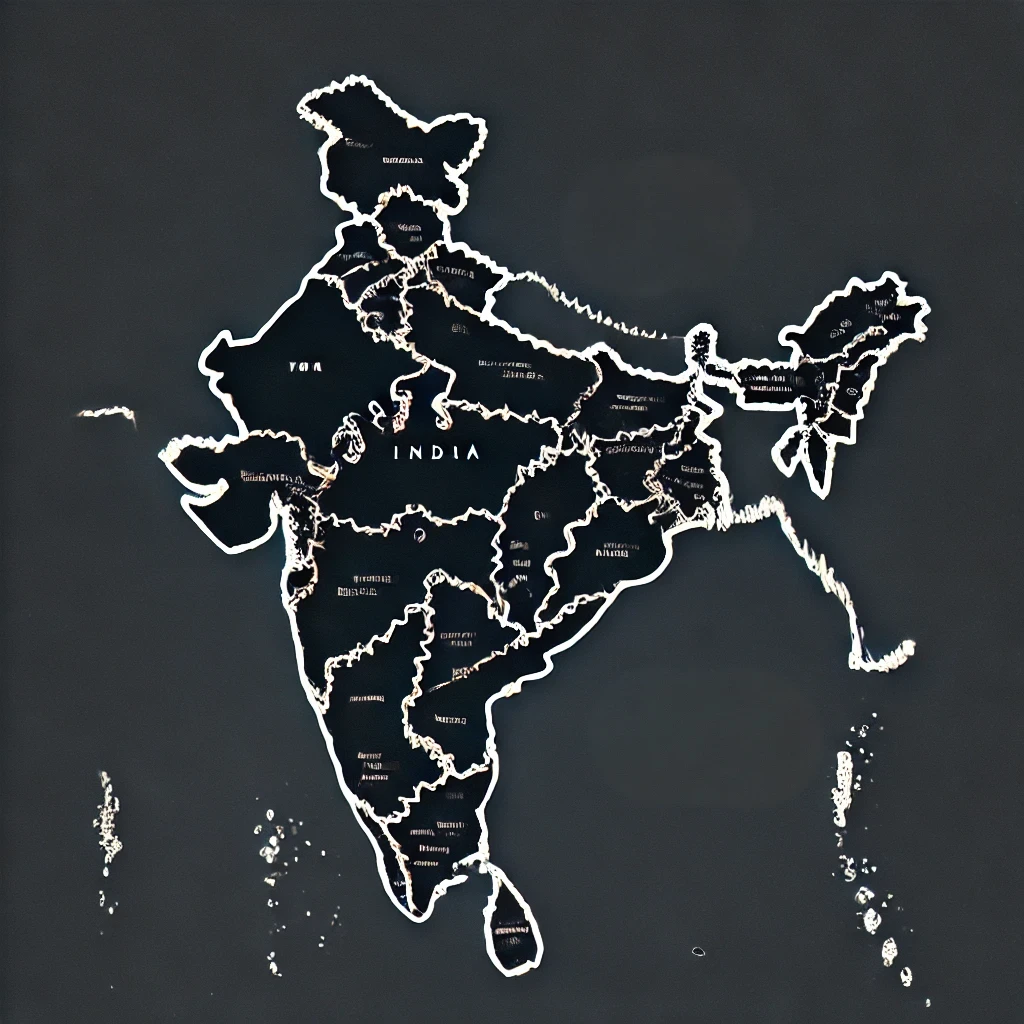
The Emergency was a period of political instability and governmental overreach that lasted from June 25, 1975, to March 21, 1977. This 635-day period, which spanned 1 year, 8 months, and 24 days, was marked by significant events and actions that had far-reaching consequences for India’s democracy.
In 1971, Indira Gandhi, then Prime Minister of India, was accused of electoral malpractices by Raj Narain, her opponent in the Rae Bareli constituency. Raj Narain filed a case alleging that Indira Gandhi had used tools such as bribery and government machinery to influence the election outcome in her favor. The results of the 1971 Rae Bareli election saw Indira Gandhi securing 66.35% of the votes, while Raj Narain, representing the Samyukta Socialist Party (SSP), garnered only 25.88% of the votes.
On June 12, 1975, the Allahabad High Court delivered a verdict finding Indira Gandhi guilty of electoral malpractice. This judgement meant that Indira Gandhi was disqualified and barred from holding any elected office for six years. Following this decision, on June 22, 1975, opposition leaders organized rallies and protests, calling for daily anti-government demonstrations.
On June 24, 1975, the Supreme Court issued a stay on the Allahabad High Court’s judgement, allowing Indira Gandhi to remain Prime Minister until her appeal was reviewed. However, she was barred from voting and had no MP privileges. The situation escalated on June 25, 1975, when a large anti-government rally took place in Delhi, led by Jayaprakash Narayan (JP). Just minutes before midnight on the same day, on the advice of Prime Minister Indira Gandhi, President Fakhruddin Ali Ahmed declared a state of Emergency in India.
The Emergency was ratified by the Union Cabinet on June 26, 1975. On June 28, 1975, The Indian Express carried a blank editorial, and The Times of India published an obituary for democracy, reflecting the media’s reaction to the sudden turn of events. The Maintenance of Internal Security Act (MISA) was amended through an ordinance on June 30, 1975, allowing the government to detain individuals without trial for voicing opposition.
On July 1, 1975, Indira Gandhi introduced a 20-point programme for economic and social reform, complemented by her son Sanjay Gandhi’s 5-point programme. The government intensified its crackdown on political opposition by banning 26 political organizations, including the Rashtriya Swayamsevak Sangh (RSS) and Jamaat-e-Islami, on July 5, 1975. The Rajya Sabha approved The Emergency on July 23, 1975, followed by the Lok Sabha on July 24, 1975. By August 5, 1975, MISA was imposed across India, and the Indian Constitution was amended multiple times to keep 64 laws out of judicial scrutiny.
During this period, it is estimated that over 100,000 people were arrested, including prominent political leaders. Some leaders went underground, while others left India. On May 4, 1976, All India Radio (AIR) and Doordarshan banned the songs of Kishore Kumar, who was a vocal critic of the government. A mandatory sterilization programme began on September 1, 1976, as part of efforts to control the population.
The 42nd Amendment to the Constitution was passed on November 2, 1976, granting extraordinary powers to the Government of India and curtailing the judiciary’s power to examine the constitutional validity of laws. By January 18, 1977, political prisoners were released, and Indira Gandhi called for fresh elections. The Lok Sabha was dissolved on January 20, 1977, and Indira Gandhi’s and the Indian National Congress (INC)’s rivals formed the Janata Party, led by Morarji Desai, on January 24, 1977.
Initially, the Election Commission of India did not recognize the Janata Alliance, so the elections were fought under the Bharatiya Lok Dal (BLD) umbrella, along with Congress (O) in Tamil Nadu and Pondicherry. The General Election results on March 16, 1977, saw the Janata Party winning 298 seats out of 542, while Indira Gandhi and her son Sanjay Gandhi lost their seats. In Rae Bareli, Raj Narain of the BLD won 53.51% of the votes against Indira Gandhi’s 36.89%. In Amethi, Ravindra Pratap Singh of the BLD secured 60.47% of the votes, defeating Sanjay Gandhi, who received 34.47% of the votes. Overall, the Janata Party won 298 seats, while the INC secured only 154 seats, its lowest tally at the time.
The Emergency was officially withdrawn on March 21, 1977. On March 24, 1977, Morarji Desai took oath as India’s Prime Minister, leading the first non-Congress coalition government at the national level. The Janata Party was recognized as a national party by the Election Commission of India on May 11, 1977.
This period remains one of the most controversial and debated chapters in India’s political history, highlighting the vulnerabilities and strengths of the country’s democratic institutions.