
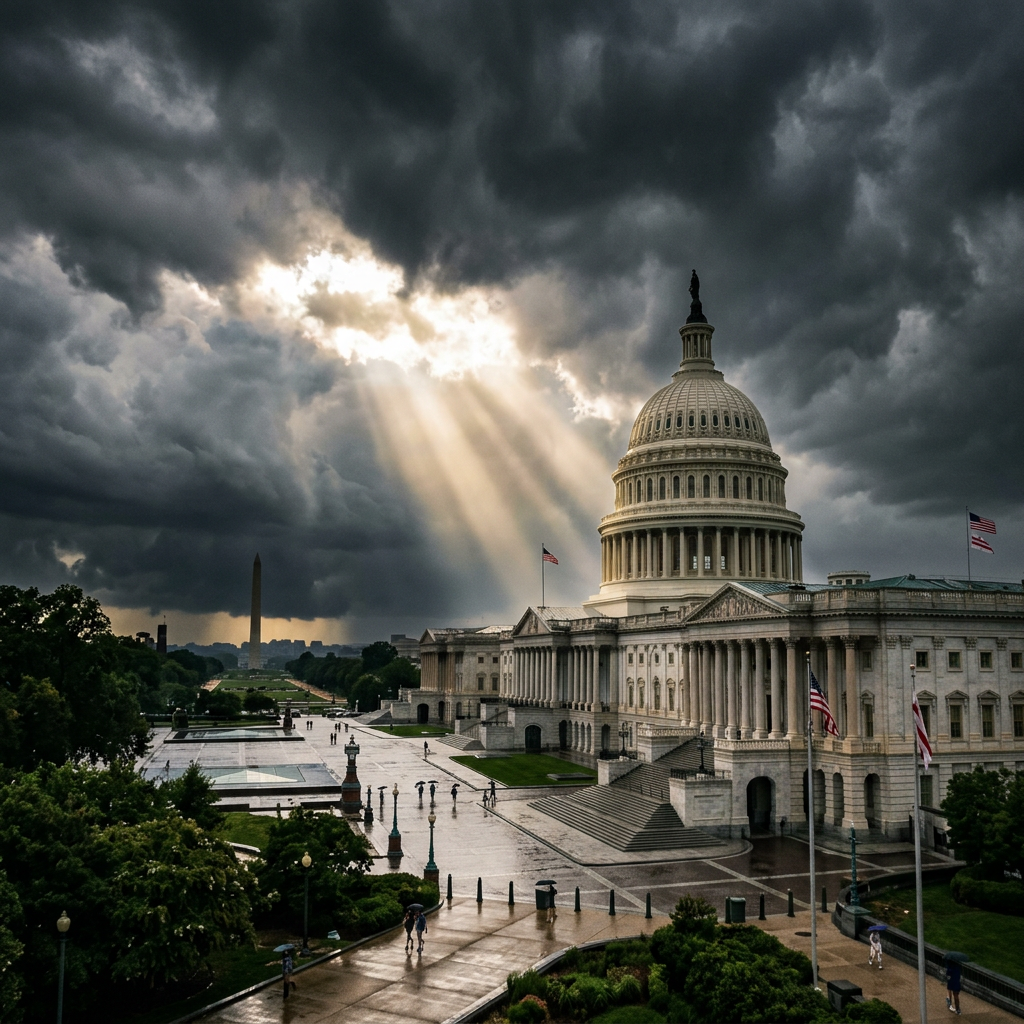
A bruising US political cycle, immigration flashpoints and institutional pushback are again turning Washington into a global political weather system.
American politics has returned to its old habit of spilling beyond American borders.
The latest US political cycle is no longer merely about domestic mobilisation, legislative arithmetic or campaign theatrics. It is about the way Washington’s internal fights are being read by governments, investors, courts, labour unions, universities, migrants, media organisations and strategic rivals across the world.
On Tuesday, US politics was dominated by three connected signals: immigration-linked protests and enforcement, contested congressional moves, and the widening global visibility of President Donald Trump’s second-term governance style. Live political coverage also showed testimony connected to Jeffrey Epstein’s former assistant, fresh partisan disputes over federal investigations, and primary contests shaping the 2026 midterm field.
The political thread is not new. What is new is its compression. Immigration, national security, public protest, labour unrest and electioneering are now moving together. When workers in World Cup host cities threaten strikes over pay, healthcare and immigration protections, the matter does not stay in a labour column. It becomes a global-sport, global-image and global-governance story.
This is why the US political story continues to rank high in international attention: the United States is hosting part of the 2026 FIFA World Cup, navigating global health tensions around Ebola screening, and entering a midterm year where every state-level primary is being treated as a clue to national mood.
The deeper political story is not simply Trump versus Democrats. It is whether the federal state can act decisively without intensifying institutional distrust. That question matters far beyond Washington because the US still anchors NATO, dollar liquidity, tech regulation debates, global sanctions architecture and migration diplomacy.
| Indicator | Current Signal |
|---|---|
| US political cycle | 2026 midterm primaries underway |
| Global impact points | Immigration, World Cup security, labour unrest, health screening, sanctions |
| Major public-interest driver | Federal power versus state/local resistance |
| Search relevance | High, due to Trump, protests, World Cup and midterm politics |
What To Watch Next
The next signal will come from how Washington handles public-order politics during the World Cup. A heavy-handed security posture may please one part of the electorate but could deepen global scrutiny. A lighter approach could expose the administration to charges of weakness. That is the narrow bridge American politics is now walking.