
Trump’s announcement reduces the immediate danger of another attack—but does not yet constitute a verified peace agreement
The United States has stepped back from an imminent new military attack on Iran after President Donald Trump said that the broad parameters of a possible agreement had been established.
The proposed framework centres on the reopening of the Strait of Hormuz, restrictions on Iran’s nuclear programme and a wider reduction in regional attacks. Trump said Israel and several Middle Eastern governments supported the diplomatic pause and warned that the military option remained available unless an agreement was concluded rapidly.
The announcement is a genuine de-escalatory development. It is not, however, the same as a signed and mutually announced peace settlement.
Iran had not publicly issued an equivalent confirmation of Trump’s description of the negotiations. Iranian media reports citing officials also disputed claims that Tehran had agreed to reopen the strait without conditions. That difference between a US announcement and a jointly confirmed agreement remains the most important qualification surrounding the story.
The Run
| Development | Why it matters | |
| Planned US strikes | Trump announced that the proposed attack had been halted. | It reduces the immediate probability of a new cycle of strikes and retaliation. |
| Negotiating framework | Washington says broad parameters have been identified. | Diplomacy has moved back to the centre of the conflict, but detailed obligations remain unclear. |
| Strait of Hormuz | Reopening the waterway is described by Washington as a central condition. | Hormuz remains essential to global oil and liquefied natural gas movements. |
| Iranian confirmation | No corresponding final agreement had been formally announced by Tehran at verification time. | Markets and governments cannot yet treat the proposed framework as irreversible. |
| Military risk | The US says military action remains possible if negotiations fail. | The development is a conditional pause, not a permanent removal of escalation risk. |
Why the Strait of Hormuz remains the decisive issue
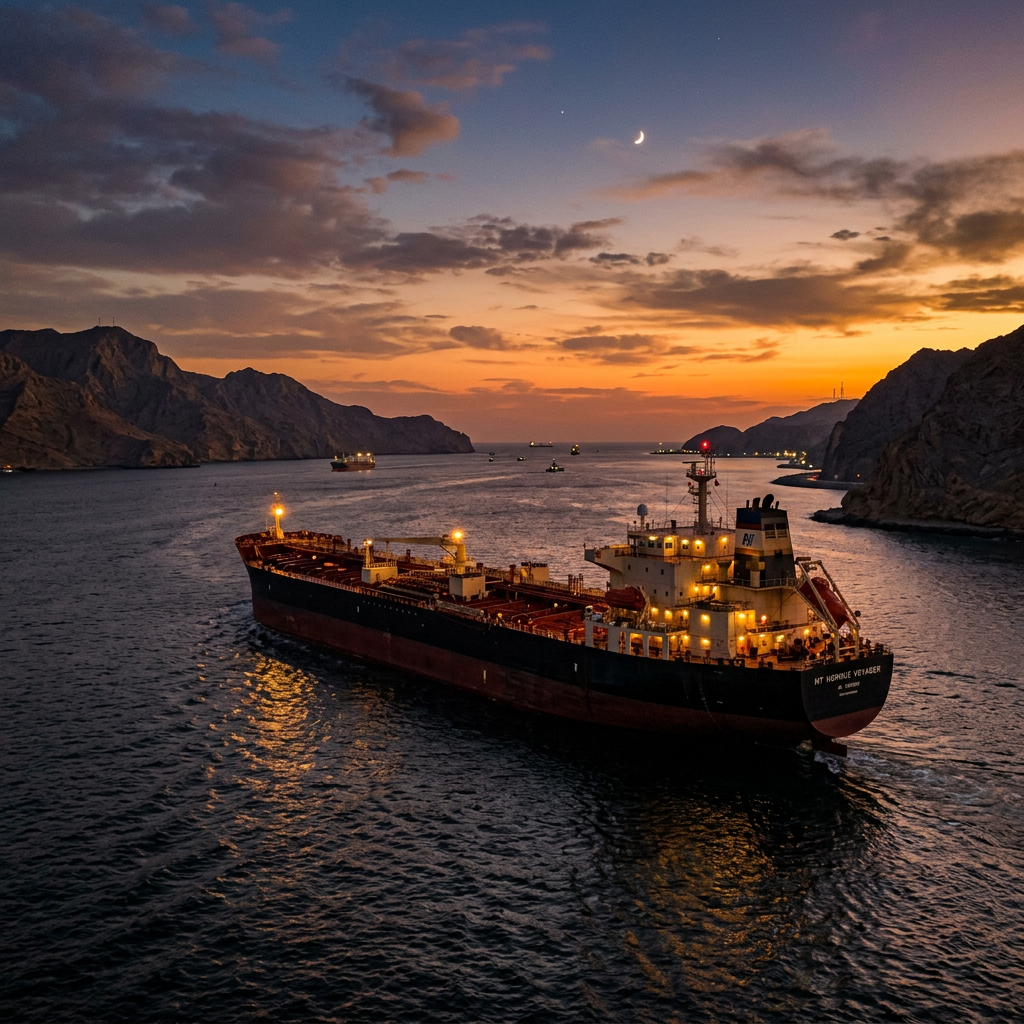
The Strait of Hormuz is not merely a regional shipping passage. It is one of the most consequential energy transit points in the world.
In 2025, approximately 25 per cent of global seaborne oil trade passed through the strait. Nearly 15 million barrels a day of crude oil—around 34 per cent of internationally traded crude—used the route, while Qatar and the United Arab Emirates together accounted for almost one-fifth of global LNG exports exposed to disruption there. Almost 90 per cent of the energy exported through Hormuz was destined for Asian markets.
Hormuz global-energy exposure
| Indicator | Scale |
| Share of global seaborne oil trade passing through Hormuz in 2025 | Around 25% |
| Crude oil passing through the strait in 2025 | Nearly 15 million barrels per day |
| Share of globally traded crude | Around 34% |
| Qatar and UAE share of global LNG exports exposed to the route | Almost 20% |
| Share of Hormuz-exported energy destined for Asia | Almost 90% |
This explains why Saudi Arabia, Qatar, the United Arab Emirates and other Gulf governments have pressed Washington and Tehran to avoid another large military exchange. Any Iranian retaliation against neighbouring energy facilities could damage countries that have simultaneously acted as US security partners and diplomatic intermediaries.
Oil prices had not yet priced in the latest announcement
Brent crude settled at $90.12 a barrel on Friday, 31 July, while West Texas Intermediate closed at $84.67. Brent gained approximately 24 per cent during July and WTI around 21 per cent as conflict, tanker risks and restricted Hormuz traffic added a geopolitical premium to oil prices.
Because Trump’s announcement emerged after the principal Friday settlements, the next full trading session will provide the first meaningful market test of whether investors regard the diplomatic initiative as credible.
A sustained fall in oil would require more than conciliatory statements. Traders will look for verifiable increases in tanker movements, lower marine-insurance costs, an end to attacks on commercial vessels and confirmation from Iran that ships can transit without special military authorisation.
What happens next?
| Watch point | Positive signal | Warning signal |
| Iranian response | Formal acknowledgement of negotiations and agreed principles | Rejection of the US version of events |
| Hormuz traffic | Rising commercial transits under internationally recognised navigation rules | Continued restrictions, attacks or compulsory IRGC coordination |
| US military posture | De-escalation of forces and strike preparations | Renewed deployment or another attack deadline |
| Regional security | Halt to attacks on Gulf energy and shipping infrastructure | Iranian, militia or Houthi attacks |
| Oil market | Falling prices, freight charges and insurance premiums | A renewed crude-price surge |
Nine145 assessment
The risk of immediate escalation has declined, but the US–Iran conflict has not ended. The diplomatic opening becomes materially credible only when the two sides publicly confirm compatible terms and commercial shipping begins returning safely to the Strait of Hormuz.
Until then, this is best described as a conditional military pause attached to an emerging negotiating framework.