
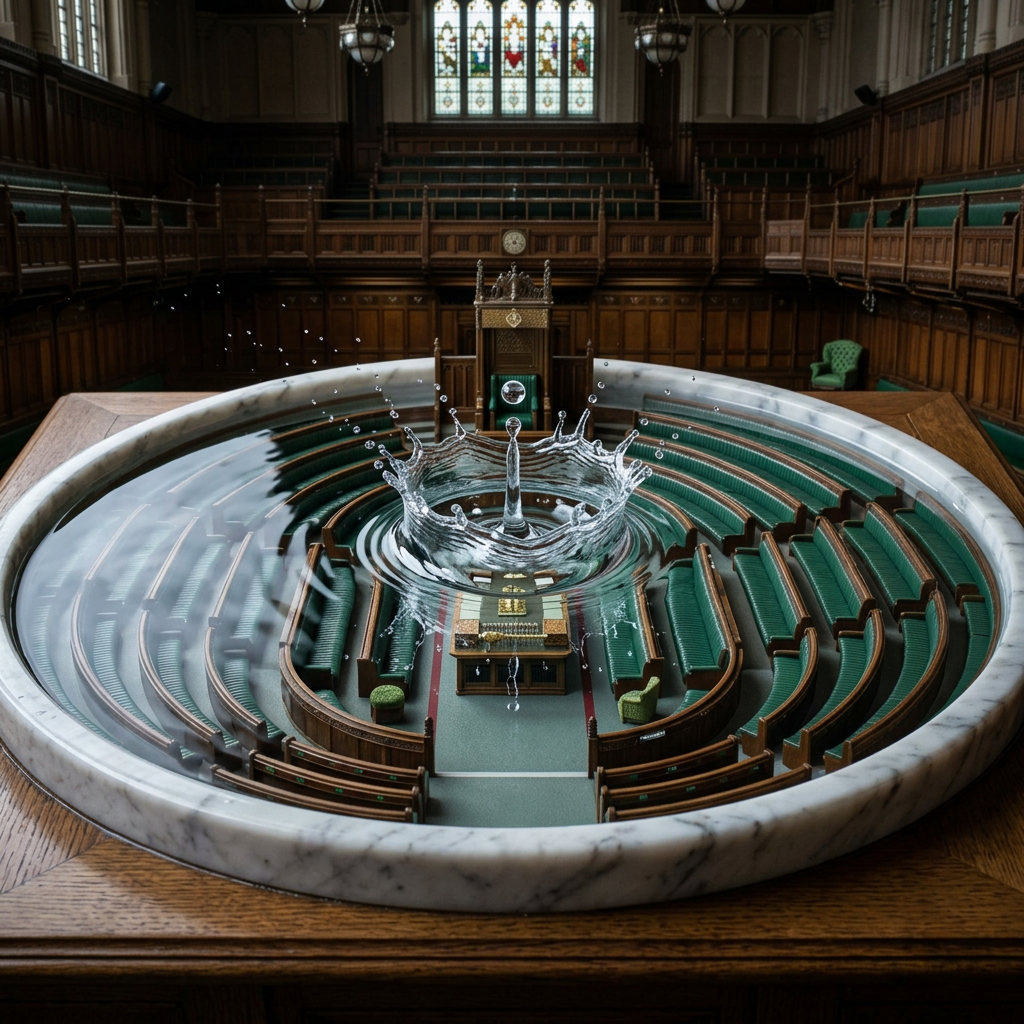
A 63 per cent seat share sounds, to the casual observer, like a landslide. Constituency-level margin data tells a rather different story — one that any serious campaign strategist preparing for Uttar Pradesh 2027 would be foolish to ignore. Beneath the Bharatiya Janata Party’s commanding 255-seat tally in 2022 lies a far more contested reality: 30 seats decided by less than a single percentage point, another 49 by under three, and a further 52 hanging in a genuinely competitive band. Read together, these numbers do not describe a state that voted decisively. They describe a state that voted narrowly, seat by seat, and where the next election could pivot on a fraction of the electorate shifting its mind.
This is the argument for margin-based psephology over seat-count psephology, and it is one that deserves far more attention than it typically receives in post-election commentary.
Seat Share Hides More Than It Reveals
Aggregate numbers are built for headlines, not for strategy. A party can win 255 seats and still be sitting on a knife’s edge in nearly a fifth of its own tally. Of Uttar Pradesh’s 403 constituencies, 79 were decided by under three per cent — a band narrow enough that a modest swing in turnout, a single credible independent candidate, or a late-breaking local grievance could tip the result. Add the 52 seats in the three-to-five per cent competitive band, and close to a third of the assembly sits within a swing that any reasonably organised opposition campaign could realistically close.
This is precisely the layer that seat-count analysis erases and margin analysis restores. For a campaign team building a 2027 strategy, the question is never simply “which seats did we win?” It is “which of our wins were structural, and which were accidental?”
The Ultra-Marginal Ten: A Case Study in Fragility
Nowhere is this fragility more visible than in the ten closest contests of 2022, each separated by a fifth of a percentage point or less.
| Rank | Constituency | Winning Party | Margin (%) |
|---|---|---|---|
| 1 | 266 – Kursi | BJP | 0.08 |
| 2 | 20 – Dhampur | BJP | 0.10 |
| 3 | 23 – Chandpur | SP | 0.10 |
| 4 | 267 – Ram Nagar | SP | 0.11 |
| 5 | 2 – Nakur | BJP | 0.12 |
| 6 | 21 – Nehtaur | BJP | 0.13 |
| 7 | 187 – Isauli | SP | 0.13 |
| 8 | 36 – Bilaspur | BJP | 0.13 |
| 9 | 51 – Baraut | BJP | 0.16 |
| 10 | 131 – Katra | BJP | 0.18 |
Seven of these ten seats went to the BJP, which on its own might read as evidence of the party’s organisational depth even in the tightest fights. But the more useful reading, from a 2027 planning perspective, runs the other way: these are precisely the seats where the BJP’s 2022 majority was least secure, and precisely where an opposition alliance with sharper local candidate selection, better booth-level mobilisation, or a consolidated anti-incumbency vote could realistically flip the outcome without needing any dramatic statewide swing.
Notably, four of these ten — Dhampur, Nakur, Nehtaur and Baraut — sit in western Uttar Pradesh, a belt where the Rashtriya Lok Dal’s farmer and Jat consolidation has historically cut into BJP margins. For any 2027 campaign, whether defending or challenging, this cluster alone justifies disproportionate resourcing relative to its raw seat count.
The Band Framework: A Working Model for 2027
Margin bands are not merely descriptive; they are a targeting instrument. A useful working model divides the assembly into six tiers, each demanding a distinct campaign posture:
- Ultra-marginal (0–1%) — 30 seats. These require the earliest candidate announcements, the most intensive booth-level organisation, and — critically — a defensive posture from the incumbent party rather than a triumphalist one. A seat won by 0.08 per cent is not a stronghold; it is a coin toss that happened to land favourably once.
- Marginal (1–3%) — 49 seats. The natural battleground tier. These seats respond most sharply to local issues — law and order perception, agrarian distress, candidate likeability — rather than to statewide narrative.
- Competitive (3–5%) — 52 seats. Still winnable with focused effort, but requiring a genuine shift in either turnout composition or vote-splitting dynamics among smaller parties.
- Leaning (5–10%) — 91 seats. The largest single band, and arguably the most strategically underrated. Seats in this tier rarely draw resources in a normal cycle, yet a five-to-ten-point margin can erode meaningfully across a single term if local governance perception sours.
- Strong (10–20%) — 117 seats. These form the core of any party’s institutional base and typically require maintenance rather than aggressive campaigning.
- Safe (20%+) — 64 seats. Genuinely insulated from short-term swings, though not from long-term demographic or organisational decay.
The strategic error that campaigns repeatedly make is treating the “strong” and “safe” categories as fixed. They are not. A seat won by twenty-two per cent in one cycle can fall to eight per cent in the next if the underlying coalition — caste arithmetic, candidate continuity, local development delivery — shifts even modestly. The 2027 campaign that wins will be the one that tracks band migration, not merely band position.
Turnout as the Hidden Variable
Overall turnout in 2022 stood at 61.03 per cent, with 9.23 crore of 15.12 crore registered electors casting a vote and NOTA absorbing 6.37 lakh ballots. In a state where the median margin across ultra-marginal and marginal seats runs to a few thousand votes, turnout differentials of even two or three percentage points between constituencies can single-handedly explain a result. Any serious 2027 campaign plan needs constituency-specific turnout modelling layered onto the margin bands above — identifying, seat by seat, whether a narrow 2022 win was driven by favourable turnout composition that may not repeat, or by genuine vote-share strength that will.
What This Means for Campaign Architecture
Translating margin data into 2027 strategy means three things in practice. First, resource allocation should be inversely weighted against 2022 margins, not aligned with them — the tightest seats need the earliest and heaviest investment, regardless of which party currently holds them. Second, candidate selection in the ultra-marginal and marginal bands should prioritise local credibility over central-command loyalty, since these are precisely the contests decided by a few thousand personal votes rather than by party wave. Third, and most overlooked, the “leaning” band of 91 seats deserves a dedicated watch-list; it is large enough, and currently under-scrutinised enough, to produce the biggest surprises of 2027 in either direction.
Elections are won in aggregate but lost in the margins. For Uttar Pradesh’s next assembly contest, the parties that internalise this distinction — and build their ground campaigns around the 79 truly contestable seats rather than the comfort of a 255-seat headline — will be the ones setting the state’s political direction in 2027.
(Analysis based on Election Commission of India constituency-wise results for the Uttar Pradesh Assembly Election 2022.)