
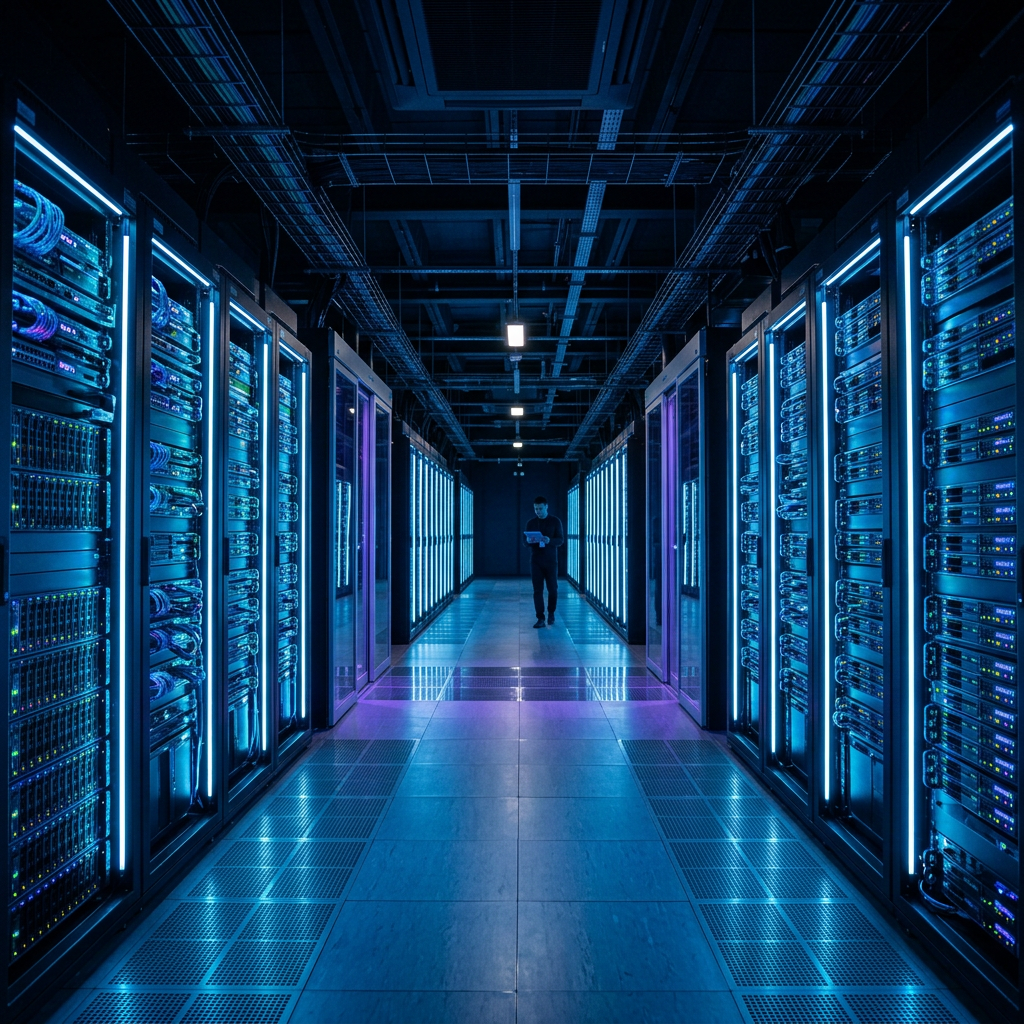
OpenAI, SpaceX, Apple and EU regulators are showing the new shape of technology: capital-heavy, energy-hungry and rule-bound.
The AI story has moved beyond chatbots.
This week’s technology signals point to a larger industrial shift: AI is becoming a market-structure story, a power-infrastructure story and a regulation story all at once.
OpenAI has reportedly filed confidential paperwork for an initial public offering, joining a high-value AI and space-tech pipeline that includes Anthropic and SpaceX. Separate market coverage has placed the combined AI IPO pipeline at multi-trillion-dollar scale, with investor appetite now a central question for the sector.
SpaceX is adding a different flavour to the same race. Elon Musk has said the company’s planned orbital AI data centres would rely mostly on existing Starlink V3 satellite technology. The concept is audacious but strategically clear: move some AI infrastructure into orbit, use solar power, radiate heat into space, and escape part of the terrestrial power bottleneck. The first such AI satellite has been described as targeting about 120 kilowatts of sustained compute power, roughly comparable to a high-performance Nvidia AI server rack.
Regulation is tightening in parallel. EU officials have rejected Apple’s request for an 18-month exemption linked to the Digital Markets Act and its upgraded Siri AI rollout, saying the DMA does not prevent Apple from launching new products and that compliance is the company’s responsibility. Non-compliance under the DMA can bring fines of up to 10% of global turnover.
The EU AI Act also remains on its implementation path, with the framework fully applicable from August 2, 2026, subject to exceptions and phased obligations.
The old tech cycle was: invent, scale, monetise. The new cycle is harsher: invent, raise billions, secure energy, satisfy regulators, defend market power, and still keep users excited.
| SciTech Signal | Why It Matters |
|---|---|
| OpenAI IPO paperwork | AI capital markets entering public test phase |
| SpaceX orbital AI plan | Compute infrastructure may move beyond Earth |
| First AI satellite target | About 120 kW sustained compute |
| EU DMA pressure on Apple | Big Tech AI rollout tied to competition rules |
| EU AI Act date | Full applicability from August 2, 2026, with exceptions |
| DMA fine risk | Up to 10% of global turnover |
The Next Signal
Watch capital and electricity. The next AI winners may not simply be the companies with the best models. They may be the ones with the cheapest power, deepest balance sheets, strongest compliance teams and enough imagination to move computation where the grid cannot easily follow.