
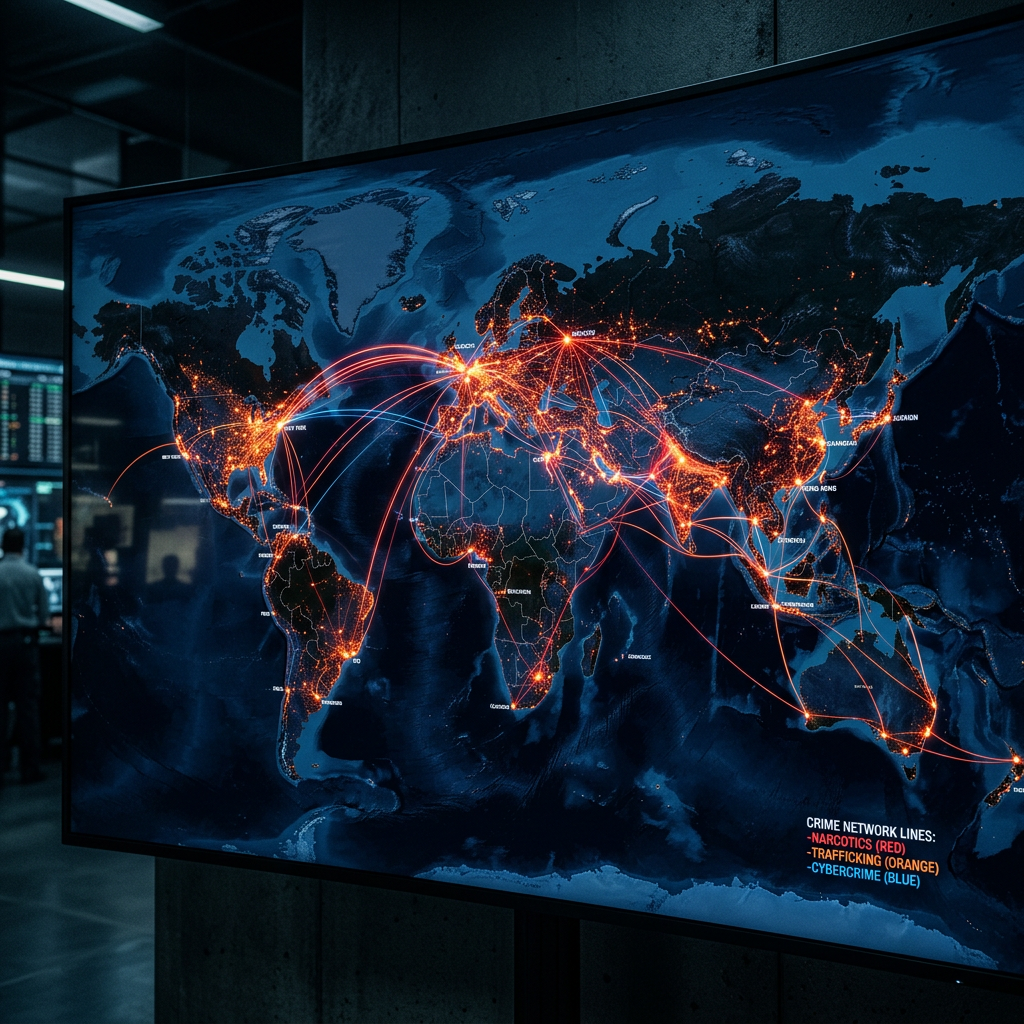
Interpol’s latest international enforcement updates show that transnational organised crime remains a major global security concern, with firearms, drugs and cybercrime networks driving cross-border law-enforcement priorities.
Interpol’s public news feed reported that more than 3,300 illegal firearms and 56 tonnes of drugs were seized in an operation across the Americas. It also highlighted a first-of-its-kind cybercrime operation in the Middle East and North Africa region that led to 201 arrests, and a European meeting focused on evolving transnational organised crime.
The numbers underline the scale of the challenge. Illegal firearms amplify violence, drug trafficking funds organised networks, and cybercrime expands criminal reach beyond geography. The convergence of these categories has become a defining feature of modern crime: encrypted communications, cryptocurrency transfers, illegal streaming operations, trafficking corridors and money-laundering networks often overlap.
The global relevance is clear. Crime syndicates exploit weak borders, digital anonymity and uneven enforcement capacity. Operations coordinated through Interpol and regional agencies such as Europol are increasingly essential because no single national police force can dismantle networks that move weapons, drugs, money and data across continents.
For a global audience, the key trend is the internationalisation of criminal enterprise. The seizure of thousands of firearms and dozens of tonnes of drugs is not just a law-enforcement success; it is also a signal of the volume and sophistication of illicit markets operating across the Americas and beyond.