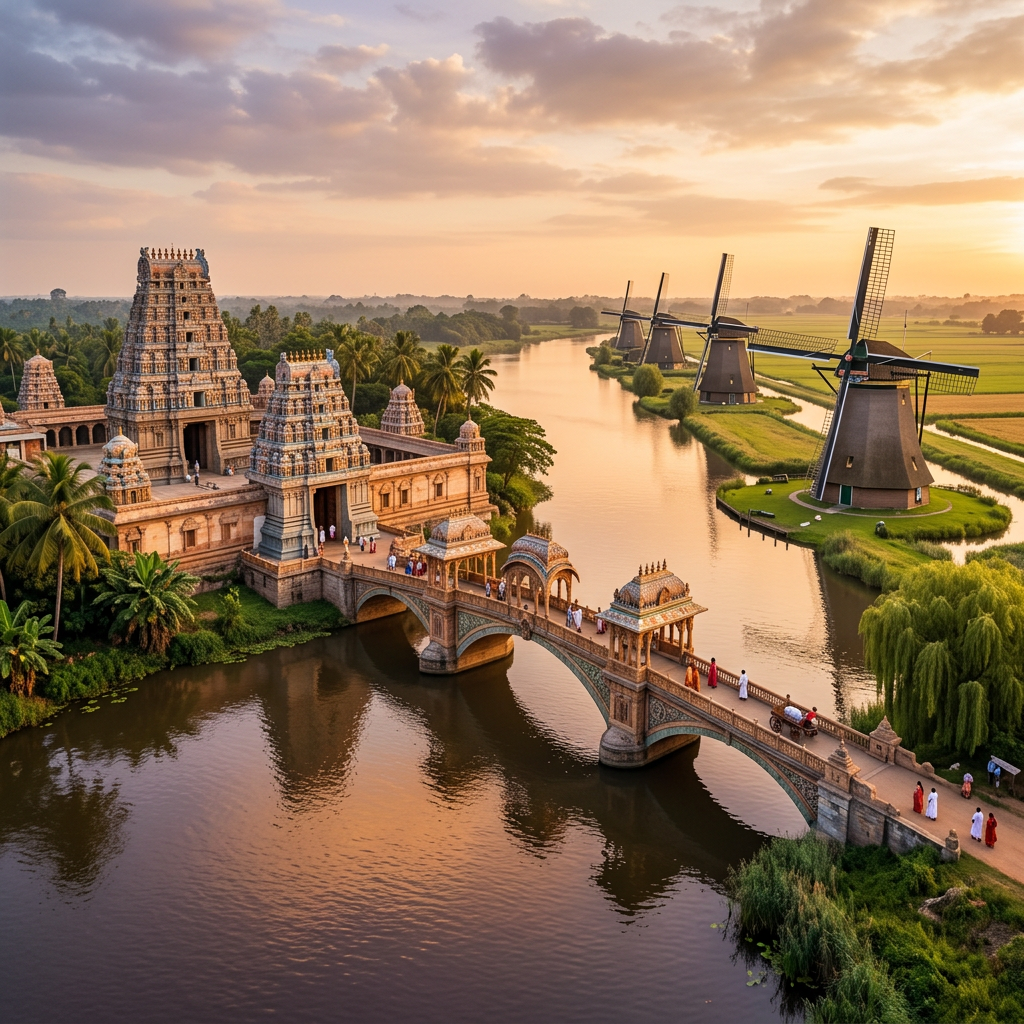
India–Netherlands ties are carried not only by governments and companies, but also by people. The Netherlands is home to approximately 300,000 members of the Indian diaspora, including around 200,000 members of the Surinami Hindustani community, which is now fully integrated into Dutch society. The cultural relationship has a recognisable Indian presence through Yoga, Indian classical dance, music, Hindi learning, student mobility and university partnerships.
The Connect
Diaspora strength: The Netherlands has the largest population of people of Indian origin in mainland Europe.
Community size: Around 300,000 members of the Indian diaspora live in the Netherlands.
Surinami Hindustani presence: Around 200,000 members of the diaspora belong to the Surinami Hindustani community.
Social integration: The Surinami Hindustani community is described as fully integrated into Dutch society.
Cultural anchor: The Gandhi Centre in The Hague has been functional since 2011 as an ICCR Cultural Centre.
Yoga popularity: Yoga is very popular in the Netherlands, giving Indian cultural outreach a wide public base.
International Day of Yoga: Yoga Day celebrations are organised every year across various Dutch cities with local Yoga institutions.
Performing arts: The Gandhi Centre offers programmes in Bharatanatyam, Tabla, Kathak and Indian music.
Language link: Hindi language classes at The Gandhi Centre keep linguistic connection alive.
Community outreach: The Gandhi Centre works with Hindu Surinami-Hindustani schools in The Hague.
Cultural programming: The Centre hosts workshops, movies, dance, music and other Indian cultural programmes.
Educational attraction: The Netherlands is a popular education destination for Indian students.
Science and technology pull: Indian students are particularly drawn to science and technology fields in the Netherlands.
Student number: More than 3,500 Indian students are presently studying in the Netherlands.
University cooperation: TU Delft, Leiden University and Maastricht University have long-standing collaborations with Indian universities.
People-to-people foundation: Students, diaspora families, cultural centres and universities make the relationship socially durable.
Cultural continuity: The Indian community adds emotional texture to a relationship otherwise shaped by trade, water and diplomacy.
Soft-power value: Yoga, classical arts and Hindi classes make India’s cultural identity visible in Dutch society.
Diaspora significance: The size and integration of the Indian-origin population make the Netherlands a major European centre of Indian presence.
Education bridge: Indian students help connect the two countries’ knowledge economies.
Civilisational connect: Cultural diplomacy gives the relationship a human resonance beyond statecraft.
Social depth: The India–Netherlands relationship is strengthened by families, students, community institutions and cultural memory.
Indian Diaspora in the Netherlands: Key Facts
Indicator
Supplied Figure / Detail
Why It Matters
Indian-origin population in mainland Europe
Largest in mainland Europe
Establishes the Netherlands as a major European centre for the Indian diaspora.
Total Indian diaspora in the Netherlands
Approx. 300,000
Shows the scale of the community.
Surinami Hindustani community
Approx. 200,000
This community forms a substantial part of the Indian-origin population.
Integration status
Fully integrated in Dutch society
Indicates a settled, socially embedded community.
Indian students
More than 3,500
Demonstrates the educational pull of the Netherlands for India.
Preferred academic field
Science and technology
Links education ties to innovation and research.
Cultural Institutions and Activities
Institution / Activity
Location / Platform
Role in Cultural Relations
The Gandhi Centre
The Hague
Functions as the ICCR Cultural Centre since 2011.
Yoga programmes
Various Dutch cities
Popularises Indian wellness and cultural practice.
International Day of Yoga
Organised annually
Gives Indian cultural outreach public visibility.
Bharatanatyam classes
The Gandhi Centre
Promotes Indian classical dance.
Tabla classes
The Gandhi Centre
Carries Indian classical rhythm traditions.
Kathak classes
The Gandhi Centre
Adds North Indian classical dance to the cultural offering.
Hindi language classes
The Gandhi Centre
Maintains linguistic and cultural continuity.
Music, dance, films and workshops
Cultural programming
Keeps Indian cultural expression active and accessible.
Outreach to Hindu Surinami-Hindustani schools
The Hague
Connects Indian cultural institutions with community education.
Educational Relations
Area
Details from Supplied Brief
Explainer
Education destination
The Netherlands is popular among Indian students.
It has become an attractive academic choice for Indians.
Student strength
More than 3,500 Indian students are studying there.
The figure shows a growing educational bridge.
Academic preference
Science and technology are especially popular.
The education link supports the innovation side of the bilateral relationship.
Dutch universities named
TU Delft, Leiden University, Maastricht University
These institutions have long-standing collaborations with Indian universities.
People-to-people effect
Students and university networks deepen bilateral familiarity.
Education creates long-term social and professional links.
A Tale in the Timeline
Period / Year
Political Track
Economic Track
Cultural / People Track
1947
Diplomatic relations established.
Formal relationship begins.
People-to-people foundations gradually evolve.
2008
Maritime cooperation enters the framework.
MoU on Ports and Maritime Transport and Logistics signed.
—
2011
—
—
The Gandhi Centre becomes functional in The Hague.
2013
—
MoU on Spatial Planning, Water Management and Mobility Management signed.
—
2015
PM Rutte visits India.
High-level political contact supports economic engagement.
—
2017
PM Modi visits the Netherlands.
Bilateral momentum expands.
—
2018
PM Rutte visits India again.
Netherlands signs ISA Framework Agreement.
—
2019
Dutch King and Queen visit India.
Maritime sector featured in the Dutch trade delegation.
Cultural visibility expands through the State Visit setting.
2021
Virtual Summit held.
Strategic Partnership on Water launched.
—
2022
75 years of diplomatic relations marked.
India participates in Floriade 2022.
Diaspora and cultural links remain central to public diplomacy.
2023
PM Rutte visits India for G20; P20 parliamentary contact grows.
First Ministerial JWG on Water held.
—
2024
Dutch frigate HNLMS Tromp visits Mumbai.
Renewable Energy MoU signed.
Yoga and cultural programming continue.
2025
Multiple ministerial visits and Foreign Office Consultations.
Healthcare, urban development, agriculture, maritime and pharma cooperation deepen.
Indian students and diaspora ties remain significant.
2026
PM-level, Foreign Minister-level and maritime engagements continue.
Trade and investment relationship remains strong.
Education and community links sustain the social base.