
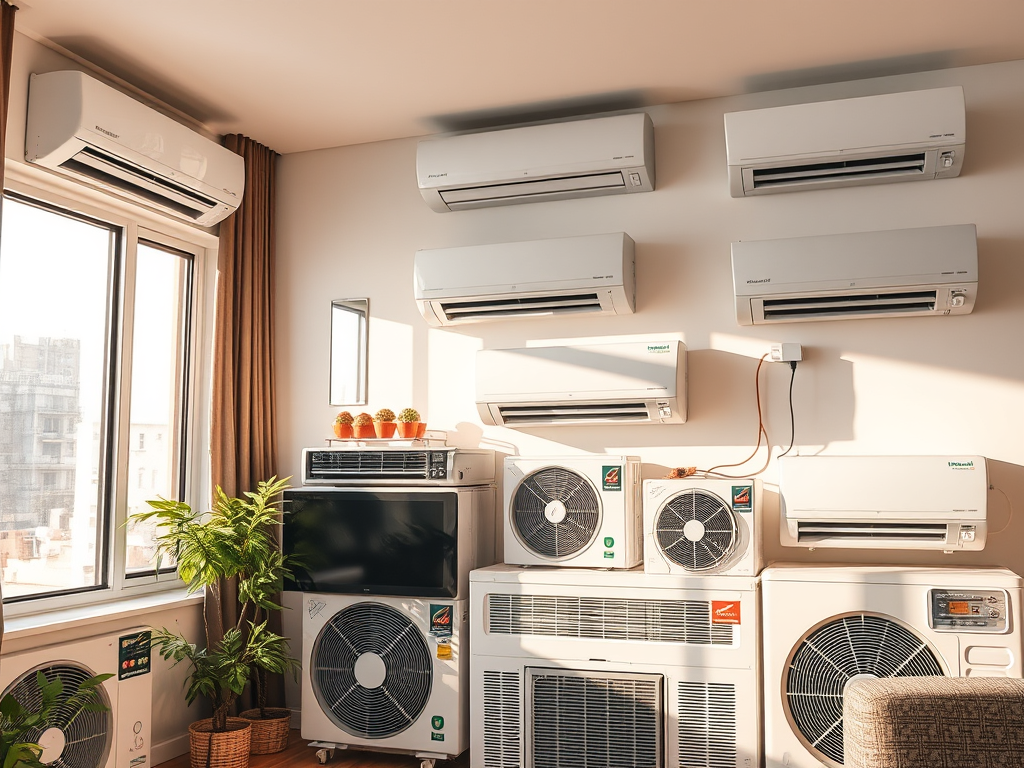
India’s air conditioner market is experiencing a period of remarkable expansion, reshaping how consumers approach cooling solutions. Understanding the dynamics of this vibrant sector, particularly the dominant split AC segment, is crucial for anyone looking to make an informed purchase or track industry trends. Factors like rising disposable incomes, increasing urbanization, record-breaking temperatures, and the relatively low existing AC penetration (estimated around 8% for room air conditioners) are fueling this surge.
Market Dimensions and Growth Trajectory
The scale of the Indian AC market is impressive. In 2024, market size estimates hovered between $5.3 and $5.4 billion USD. Looking ahead, the potential remains strong, with forecasted Compound Annual Growth Rates (CAGR) projected anywhere from 6.9% to a significant 15.6% in the coming years.
The Room Air Conditioner (RAC) category, especially split ACs, is the primary driver of this growth. The intense heatwaves witnessed in 2024 triggered an unprecedented spike in demand, with some reports suggesting a staggering 60% growth in AC sales during the peak summer months – far exceeding typical seasonal increases. This highlights the growing necessity of air conditioning in Indian households.
Leading Brands: Market Share in the Indian AC Market (Room ACs)
Competition within the Indian AC market is fierce. Market share data provides a clear picture of brand leadership and the competitive landscape as of late 2024:
- Voltas (Tata Group): Consistently leads the pack, commanding a market share between 20.5% and 21.2%. The brand achieved phenomenal success, selling over 2 million units in FY24 and hitting the 1 million mark in just the first four months of 2024. Their AC segment revenue saw a 51% jump in Q1 FY25.
- Daikin: The Japanese technology giant holds a strong second position with an estimated 18-19% market share in FY24, known for its extensive product portfolio.
- Blue Star: A prominent domestic competitor, ranked third with over 14% market share by December 2024. The company reported a robust 44% revenue increase in its unitary products division for Q1 FY25.
- LG: Positioned fourth, holding roughly 9% of the market in FY24. LG focuses on premium offerings featuring AI and dual inverter technology.
- Lloyd (Havells): This domestic brand is rapidly gaining ground. While previously ranked seventh, Lloyd reported impressive 47% revenue growth in Q1 FY25, signalling strong momentum and increasing consumer preference.
- Godrej: Holds approximately 5% market share, carving a niche with its focus on environmentally conscious and innovative features.
- Samsung: With slightly over 5% market share, Samsung competes effectively in the mid-to-high range, offering features like Wind-Free™ technology and smart connectivity.
- Hitachi (Johnson Controls-Hitachi): Demonstrated significant growth, with its cooling products segment revenue soaring by 76% in Q1 FY25. Its market share is estimated to be in the 5-8% range.
- Carrier: A pioneer in air conditioning technology, Carrier also holds an estimated market share between 5% and 8%.
- Panasonic: Ranked tenth, suggesting a market share likely under 5%, known for features like Nanoe™ X air purification and smart home (Matter) integration.
Table 1: Estimated Indian Room AC Market Share (FY24 / Latest 2024)
| Rank | Brand | Estimated Market Share (%) | Time Period / Notes |
| 1 | Voltas | 20.5% – 21.2% | Dec 2024 / June 2024 |
| 2 | Daikin | 18% – 19% | FY 2024 |
| 3 | Blue Star | >14% | Dec 2024 / Revenue up 44% Q1 FY25 |
| 4 | LG | ~9% | FY 2024 |
| 5 | Godrej | ~5% | Current/FY24 |
| 6 | Samsung | >5% | Current/FY24 |
| 7 | Lloyd | N/A (Revenue up 47% Q1 FY25) | Previously #7, growing fast |
| 8/9 | Hitachi | 5% – 8% (Est.) | Revenue up 76% Q1 FY25 |
| 8/9 | Carrier | 5% – 8% (Est.) | – |
| 10 | Panasonic | <5% (Est.) | Ranked #10 |
Note: Market shares are estimates derived from available reports and may differ slightly across sources. Growth figures predominantly reflect Q1 FY25 performance.
Spotlight on Popular 1.5 Ton Split AC Models
While exact sales figures for individual models remain proprietary, analysing frequency in reviews, comparisons, and retail listings gives us a good indication of popular choices in the widely sought-after 1.5-ton category over the past year.
Table 2: Frequently Mentioned 1.5T Split AC Models (Past Year)
| Brand | Model Name/Series | Star Rating (BEE Year) | Key Features | Approx. Price (INR) |
| LG | US-Q19YNZE / TS-Q19YNZE1 | 5 Star (2024/2025) | AI Dual Inverter, 6-in-1 Convertible, VIRAAT Mode, HD Filter (Anti-Virus) | 45,000 – 47,000 |
| LG | US-Q18JNXE / TS-Q18JNXE3 | 3 Star (2024/2025) | AI Dual Inverter, 6-in-1 Convertible, HD Filter (Anti-Virus) | 36,000 – 37,000 |
| Daikin | MTKL50U | 3 Star (2024) | Inverter, PM 2.5 Filter, Dew Clean, Coanda Airflow | 37,000 – 38,000 |
| Daikin | MTKM50U | 5 Star (2023/2024) | Inverter, PM 2.5 Filter, Dew Clean, 3D Airflow, High ISEER | 45,000 – 46,000 |
| Panasonic | CS/CU-NU18AKY5WX / CS/CU-NU18ZKY5W | 5 Star (2024/2025) | Wi-Fi Smart Inverter, Matter Enabled, 7-in-1 Convertible, True AI, PM 0.1 Filter | 44,000 – 47,000 |
| Panasonic | CS/CU-SU18ZKYWT / CS/CU-SU18AKY3W | 3 Star (2024/2025) | Wi-Fi Smart Inverter, 7-in-1 Convertible, True AI, PM 0.1 Filter | 36,000 – 37,500 |
| Voltas | 183V Vectra CAW / 183V Vectra Series | 3 Star (2024) | Inverter, 4-in-1 Adjustable, Anti-dust Filter | 33,000 – 34,000 |
| Carrier | CAI18EE3R35W0 / ESTER EDGE FXi | 3 Star (2024/2025) | Wi-Fi Smart Inverter, 6-in-1 Flexicool, HD & PM 2.5 Filter | 35,000 – 36,000 |
| Blue Star | IC518ZNURS / IC518YNURS | 5 Star (2024/2025) | Wi-Fi Smart Inverter, 5-in-1 Convertible, AI Pro, Multi Sensors | 44,000 – 45,000 |
| Lloyd | GLS18I3FWAGC | 3 Star (2023) | Inverter, 5-in-1 Convertible, Anti-Viral + PM 2.5 Filter | 34,000 – 36,000 |
Note: Prices are indicative and can change based on the retailer, ongoing promotions, and purchase timing. Star ratings reflect the Bureau of Energy Efficiency (BEE) label year as mentioned in source data.
Market Dynamics and Consumer Considerations
The Indian AC market is defined by its dynamism and intense competition. Brands frequently launch new models, often labelled “2024” or even “2025,” signifying rapid product cycles. While this spurs innovation, it can sometimes mean minor feature updates receive significant marketing focus, potentially causing confusion for buyers trying to differentiate value.
This rapid turnover also raises a practical concern: the long-term availability of spare parts for models that might be discontinued after only a few years on the market.
A significant trend is the robust performance and growth of domestic brands like Voltas, Blue Star, and Lloyd (Havells). Their success in competing against established global manufacturers suggests strengths in understanding local needs (e.g., designing for high ambient temperatures, effective dust filtration), leveraging widespread distribution networks, and potentially offering more competitive pricing or service structures tailored to the Indian context.
In conclusion, the Indian AC market presents a landscape of significant growth, intense competition, and evolving consumer preferences, with both global and domestic players vying for dominance.