
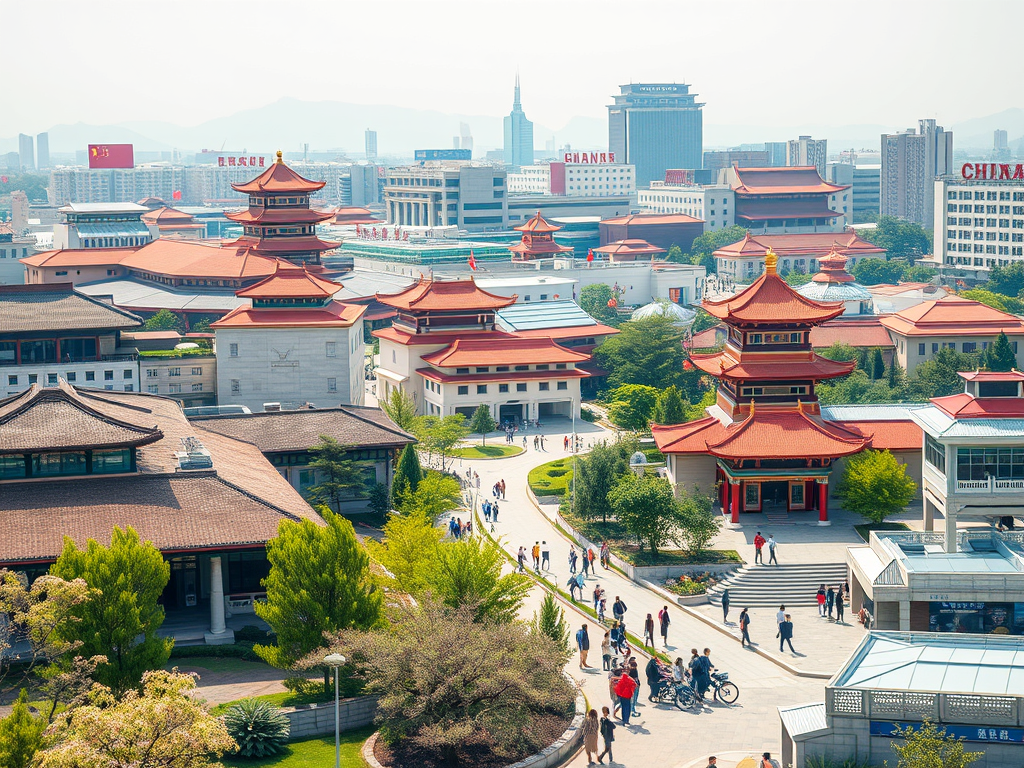
China’s higher‑education system—already the world’s largest—continues to broaden in both scale and diversity. The most recent figures supplied by its Ministry of Education (MOE) reveal a complex tapestry of institutions, ranging from elite research universities overseen by the central government to a vast network of locally run vocational and adult colleges. Two headline findings stand out:
- Postgraduate capacity remains heavily centralised, with more than one‑third of postgraduate‑granting bodies answerable directly to Beijing.
- Mass expansion is being driven at local level and in the non‑government sector, especially in vocational and independent institutions.
Table 1 Institutions Providing Postgraduate Programmes
| Category | Total | Central HEIs* | — Under MOE | — Other Central Agencies | Local HEIs | — Education Dept. | — Other Depts. | — Local Enterprises | Non‑government | Sino‑foreign (legal person) |
| All postgraduate bodies | 827 | 301 | 76 | 225 | 520 | 454 | 65 | 1 | 5 | 1 |
| Academic universities | 594 | 111 | 76 | 35 | 478 | 454 | 24 | 0 | 5 | 0 |
| Research institutes | 233 | 190 | — | 190 | 42 | — | 41 | 1 | 0 | 1 |
* “Central HEIs” are institutions administered by national ministries or agencies.
Key points
- Central agencies still dominate China’s research institutes (190 of 233).
- Academic universities that award master’s and doctoral degrees are overwhelmingly local (478 of 594), yet almost all remain state‑run rather than private.
Table 2 Higher‑Education Institutions by Level and Ownership
| Type of institution | Total | Central HEIs | — MOE | — Other Central | Local HEIs | — Education Dept. | — Other Depts. | — Local Enterprises | Non‑government | Sino‑foreign (legal person) |
| Academic universities (undergraduate & above) | 1,238 | 114 | 76 | 38 | 725 | 648 | 77 | 0 | 390 | 9 |
| of which: Independent colleges | 164 | — | — | — | — | — | — | — | 164 | — |
| Professional (application‑oriented) universities | 32 | 0 | 0 | 0 | 10 | 9 | 1 | 0 | 22 | 0 |
| Vocational colleges (short‑cycle) | 1,486 | 4 | 0 | 4 | 1,129 | 580 | 503 | 46 | 350 | 3 |
| Adult higher‑education schools | 256 | 13 | 1 | 12 | 241 | 85 | 120 | 36 | 2 | 0 |
| Other ordinary HEIs (non‑government) | 21 | 1 | 0 | 1 | 5 | 2 | 3 | 0 | 15 | 0 |
Reading the numbers
- Academic HEIs (1,238) remain the sector’s flagship, yet nearly a third (390) are non‑government—chiefly former “independent colleges” that have converted to private status since 2021.
- Vocational colleges (1,486) are the fastest‑growing tier. Almost 76 % are run by local authorities, reflecting Beijing’s policy to expand skills‑based education outside the traditional university pathway.
- Adult HEIs (256) illustrate China’s lifelong‑learning push. One in seven is centrally administered, but local enterprises already operate 36, underscoring industry’s role in reskilling workers.
- Sino‑foreign institutions with their own legal status remain niche (just 13 in total), yet they signal a cautious opening to overseas collaboration.
Analysis: Central Versus Local Dynamics
China’s higher‑education map reveals a deliberate dual strategy:
- Concentrate research power at the centre. National ministries keep a tight grip on top‑tier research institutes, ensuring alignment with strategic priorities such as semiconductors, AI and space science.
- Delegate mass expansion to the provinces. Local governments have been given leeway—and funding incentives—to set up vocational and adult colleges that serve regional labour markets. The result is a three‑to‑one ratio of local to central institutions across the entire sector.
Private capital is increasingly important, but with caveats. Independent colleges and non‑government vocational schools account for roughly one in four HEIs, yet they still operate within strict regulatory frameworks and curricula approved by provincial education departments.
Implications for Students and Policy‑makers
- Students now have unprecedented choice: academic degrees for research‑oriented careers, professional universities for applied disciplines such as finance and media, and vocational colleges for technical trades—from robotics to elderly care.
- Policy‑makers must reconcile quality and quantity. While expansion widens access, maintaining teaching standards—especially in rapidly proliferating vocational colleges—poses a continuing challenge.
- Industry partners are playing a greater role, particularly at the vocational and adult levels, hinting at closer links between curricula and market demand.
Outlook
China is likely to press ahead with its tiered system: a small constellation of centrally funded flagship universities and research institutes at the apex, supported by a broad base of locally managed institutions that deliver the bulk of undergraduate, technical and continuing education. Private and Sino‑foreign providers will keep growing, but under the state’s watchful eye.