
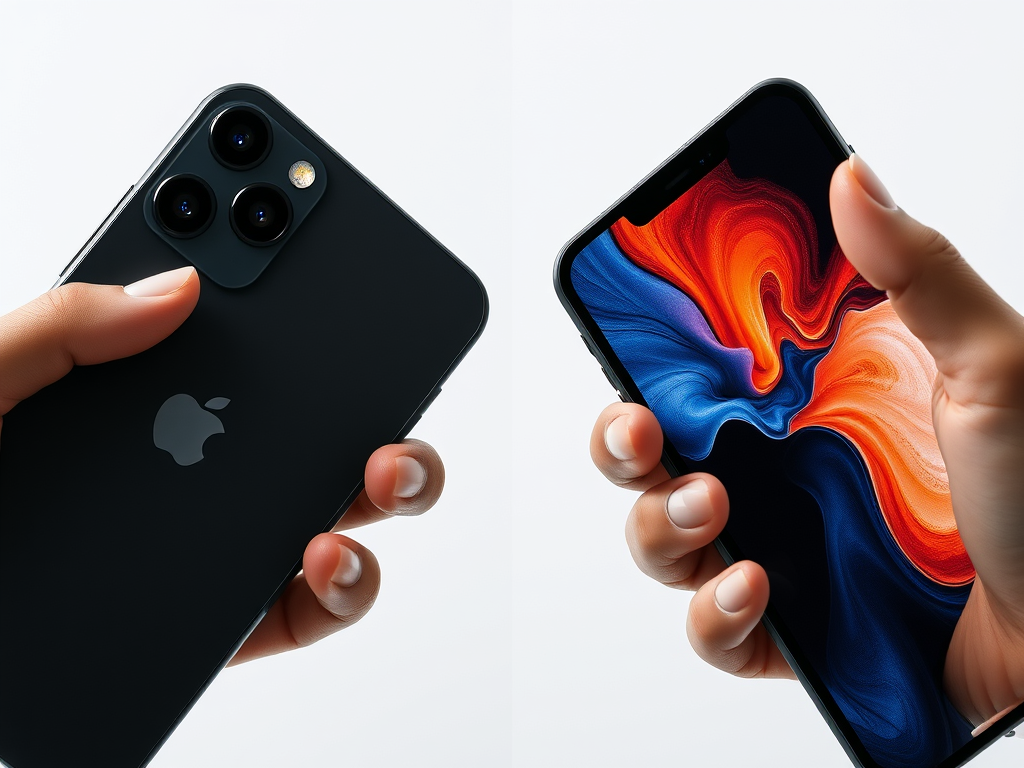
The year is 2025, and the smartphone landscape is on fire with the debut of two heavyweight devices: the iPhone 16 Pro Max and the Google Pixel 9 Pro XL. Each handset boasts top-tier technology, impressive cameras, and elegant aesthetics, all in a bid for the crown of “ultimate smartphone.” But which one truly rises above the competition? In this in-depth comparison, we explore their specifications, highlight their standout features, and share the user experiences that matter, empowering you to make the most informed choice possible.
Design and Durability
Both the iPhone 16 Pro Max and the Google Pixel 9 Pro XL are thoughtfully designed with premium materials. The iPhone 16 Pro Max retains Apple’s signature flat edges and eliminates the notch, offering ultra-thin bezels to maximize the visual experience. Its quartet of finishes—Black Titanium, White Titanium, Natural Titanium, and the new Desert Titanium (a subtle rose-gold hue)—complements the titanium frame for a refined yet robust build. According to Apple, the Ceramic Shield front panel is 50% stronger than earlier models. The addition of an “Action Button” on the left side allows for tailored shortcuts, adding versatility to the overall design.
Meanwhile, the Google Pixel 9 Pro XL follows a more rounded aesthetic, featuring a matte-finish rear with a reflective frame. Although this gleaming border can accumulate fingerprints, it bestows a distinctive look and feel. The Pixel comes in four color choices: Obsidian, Porcelain, Hazel, and Rose Quartz. Both phones carry an IP68 rating for dust and water resistance, ensuring that day-to-day bumps and spills won’t threaten their longevity.
Display
When it comes to the screens, both devices deliver outstanding visuals, though there are subtle differences. The iPhone 16 Pro Max sports a 6.9-inch Super Retina XDR display at a resolution of 2868 x 1320, with a density of 460 ppi. Thanks to ProMotion, it dynamically adjusts the refresh rate up to 120Hz, resulting in effortless scrolling and fluid transitions. It also reaches a peak brightness of 2000 nits, ensuring clarity in most lighting conditions.
The Google Pixel 9 Pro XL, for its part, offers a slightly smaller 6.8-inch Super Actua display, featuring a resolution of 1344 x 2992 and a higher pixel density of 486 ppi. It too supports adaptive refresh rates between 1Hz and 120Hz, balancing smooth performance and power efficiency. Remarkably, the Pixel sets itself apart with a stunning peak brightness of 3000 nits, which is particularly beneficial for legibility under direct sunlight.
Camera
Camera performance is pivotal for many smartphone users, and both devices excel in this arena with top-notch hardware and software. The iPhone 16 Pro Max features a trio of rear cameras: a 48MP main lens, a 48MP ultrawide lens, and a 12MP telephoto lens offering 5x optical zoom. Notably, the 48MP ultrawide sensor provides exceptional detail, and the 5x telephoto lens—borrowed from the Pro Max line—further broadens its zoom range. Videographers will appreciate its 4K Dolby Vision recording at up to 120fps and a groundbreaking high-resolution slow-motion setting at 4K 120fps, along with the ever-popular Cinematic mode for a shallow depth of field.
The Google Pixel 9 Pro XL likewise showcases a formidable triple-camera configuration: a 50MP main lens, a 48MP ultrawide lens, and a 48MP telephoto lens with 5x optical zoom. Google’s famous image processing, powered by AI, yields eye-catching photos with lively colors and remarkable dynamic range. Additional AI-driven features—like Macro Focus for extreme close-ups and Super Res Zoom for enhanced digital zoom—round out the Pixel’s imaging toolkit.
In comparing results, the iPhone 16 Pro Max’s updated ultrawide lens and 5x telephoto camera shine in well-lit settings, capturing crisp details. Its high-resolution slow-motion recording also stands out. The Pixel 9 Pro XL, however, often delivers more realistic color balance and dynamic range under challenging lighting conditions, illustrating Google’s continued leadership in software-based photography.
Audio
Audio quality on both smartphones is excellent, though each takes a slightly different approach. The iPhone 16 Pro Max includes spatial audio capabilities, along with stereo recording supported by four studio-level microphones. This setup ensures both recordings and playback sound immersive and clear.
The Google Pixel 9 Pro XL also provides stereo speakers and incorporates three microphones with noise cancellation. Like the iPhone, it supports spatial audio for a more engaging listening experience.
Performance
Powering the iPhone 16 Pro Max is Apple’s A18 Pro chip, engineered to deliver exceptional speed and efficiency. Benchmarks place it ahead of the Google Pixel 9 Pro XL, which uses the Google Tensor G4 processor. In everyday usage—such as web browsing, social media, or email—both devices provide swift, consistent performance.
However, the performance gap becomes visible during resource-intensive tasks like gaming. The iPhone 16 Pro Max manages graphically demanding titles effortlessly, while the Pixel 9 Pro XL may need to adjust some games to medium settings to maintain steady frame rates. This distinction could be pivotal for mobile gaming enthusiasts.
Battery Life
When it comes to endurance, the iPhone 16 Pro Max takes the top spot. Its larger battery and Apple’s efficient A18 Pro chip help it reach an impressive average of 17 hours and 35 minutes in rigorous tests, surpassing most rivals. The Pixel 9 Pro XL still offers strong battery life, clocking in at around 14 hours in certain evaluations—an improvement over previous Pixel models, though not quite matching the iPhone.
Both devices support fast charging, but they do so in different ways. The iPhone 16 Pro Max relies on MagSafe wireless charging up to 25W and fast wired charging (20W or higher). The Pixel 9 Pro XL offers fast wired charging that can reach 70% in just 30 minutes with a 45W USB-C adapter, plus speedy wireless charging.
Connectivity
Each phone presents a complete suite of connectivity features, including broad 5G compatibility. The iPhone 16 Pro Max accommodates various 5G bands, from n1 and n2 to n260 and n261, and supports Gigabit LTE with 4×4 MIMO.
On the Pixel 9 Pro XL side, 5G Sub 6 GHz and mmWave are supported (although the specific bands may vary by region). It also includes Wi-Fi 7 (802.11be) with 2×2 MIMO, plus Bluetooth 5.3.
AI Capabilities
AI-driven features play a central role on both phones, yet their timelines and implementations differ. The iPhone 16 Pro Max will introduce Apple Intelligence, a suite of AI features, after launch through software updates. These functionalities include:
- A redesigned Siri for improved voice recognition and typed commands
- Writing tools for grammar and style suggestions, plus rewriting content in various tones
- Photo-editing capabilities, such as removing unwanted objects
In contrast, the Google Pixel 9 Pro XL arrives with Gemini, Google’s most powerful AI model to date, bringing:
- Gemini Live, a conversational AI that supports more organic and fluid dialogs
- Pixel Studio, a generative AI image tool for reimagining photos and creating artistic variations
- Add Me, enabling easy insertion of people into group pictures
- Magic Editor, which facilitates substantial photo edits like repositioning subjects and fine-tuning lighting
- Call Screening, filtering unknown callers and identifying spam
Though these AI functions are undeniably advanced, they won’t be vital for everyone.
Software
Running the show on the iPhone 16 Pro Max is iOS 18, while the Google Pixel 9 Pro XL operates on Android 14. Both OSes offer smooth, intuitive experiences, but they serve different user bases. iOS is celebrated for its streamlined interface and strong app optimization, whereas Android champions customization and adaptability.
Price and Availability
The iPhone 16 Pro Max starts at $1199 (for the 128GB variant), with incremental price increases for expanded storage. Meanwhile, the Google Pixel 9 Pro XL begins at $999, also scaling with storage tiers. Both phones are widely accessible through major network providers and electronics retailers.
In India, the iPhone 16 Pro Max starts at ₹119,900, while the Pixel 9 Pro XL is sold across multiple online and offline outlets in Delhi.
Conclusion
Deciding between the iPhone 16 Pro Max and Google Pixel 9 Pro XL can be challenging, given their myriad strengths. The iPhone shines in overall performance, superior battery life, and specialized camera functionalities like high-resolution slow-motion video. The Pixel stands out for its distinctive design, exceptionally bright screen, and robust AI toolkit.
Ultimately, the ideal device for you hinges on your usage and what you value most. Power users seeking top-tier performance, lengthy battery capacity, and cutting-edge camera features may lean toward the iPhone 16 Pro Max. However, those intrigued by unique aesthetics, a luminous display, and leading AI features might favor the Pixel 9 Pro XL.
For photography buffs, the iPhone’s hardware advancements could be the deciding factor, while gamers may appreciate the iPhone’s potent internals. If battery longevity is high on your list, the iPhone again takes the lead.
Both devices deliver a first-rate experience, so your final verdict will depend on personal taste and the features that matter most to you.
| Feature | iPhone 16 Pro Max | Google Pixel 9 Pro XL |
| Starting Price | $1199 | $999 |
| Display | 6.9-inch Super Retina XDR, 120Hz | 6.8-inch Super Actua, 120Hz |
| Processor | Apple A18 Pro | Google Tensor G4 |
| RAM | 8GB | 16GB |
| Storage Options | 128GB, 256GB, 512GB, 1TB | 128GB, 256GB, 512GB, 1TB |
| Rear Cameras | 48MP Main, 48MP Ultrawide, 12MP 5x Telephoto | 50MP Main, 48MP Ultrawide, 48MP 5x Telephoto |
| Front Camera | 12MP TrueDepth Camera | 42MP |
| Battery Life | Up to 17 hours 35 minutes | Up to 14 hours |
| Charging Speed | MagSafe wireless up to 25W, fast wired charging | Fast wired to 70% in 30 min, fast wireless |
| Durability | Titanium band, Ceramic Shield display | IP68 rating |
| Software | iOS 18 | Android 14 |
| Special Features | Apple Intelligence (future), High-res slow-mo | Gemini AI, Magic Eraser, Add Me |