
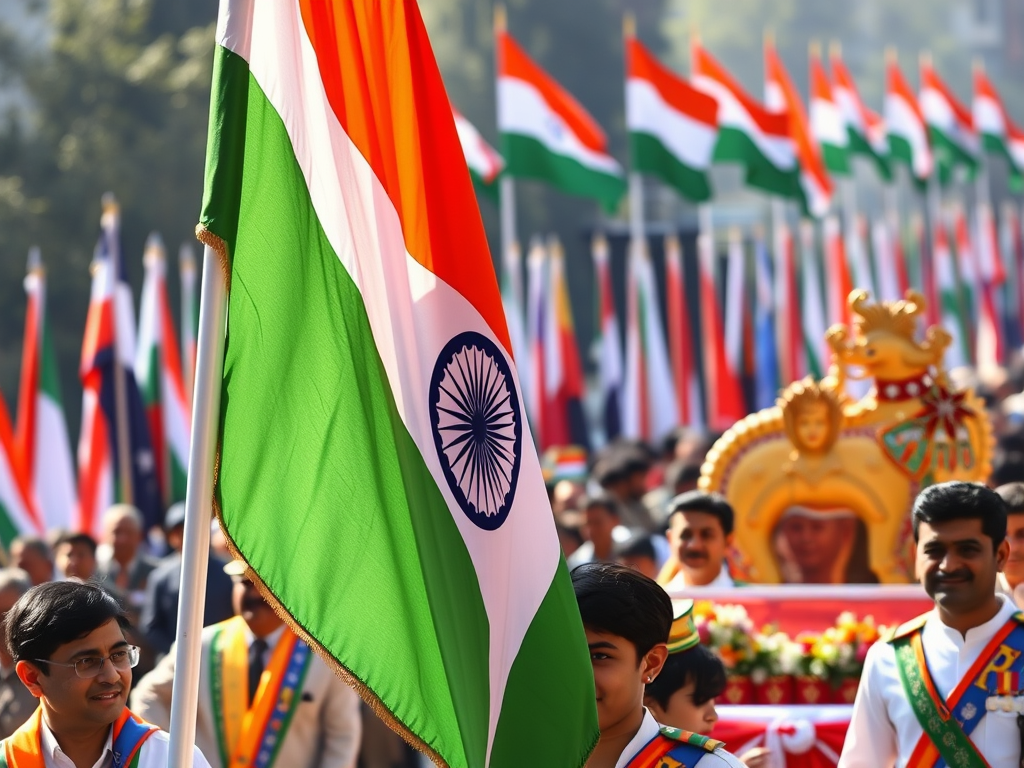
The Republic Day chief guest is more than a visiting dignitary. Over time, the invitation has become one of India’s clearest public instruments of diplomatic signalling—offering a snapshot of the relationships New Delhi chooses to foreground at a given moment. From the first parade in 1950 to the dual European Union leadership invited for 2026, the guest list reads like a carefully edited record of India’s external engagements, regional priorities, and evolving international posture.
The tradition began on 26 January 1950 with President Sukarno of Indonesia as chief guest. In hindsight, this was a precise choice: early invitations frequently reflected India’s attention to newly independent partners and its effort to shape a post-colonial diplomatic neighbourhood. In subsequent decades, the list broadened considerably—moving beyond immediate geography into a fuller spectrum of global relationships, including repeated appearances from European states and sustained representation from Asia and Africa.
The pattern is not one of uniformity, but of deliberate variety. The roster includes heads of state and heads of government, monarchs, senior political figures, and at times dignitaries whose titles sit outside the familiar President–Prime Minister framework. This mix indicates that Republic Day invitations have operated as an adaptable diplomatic language—capable of reflecting not only national ties, but also the nature of leadership and representation a relationship requires in that year.
Two features define the long arc of this list.
First, repeat invitations function as a form of continuity. In the year-by-year record provided, France appears six times (1976, 1980, 1998, 2008, 2016, 2024), while the United Kingdom is invited six times (1956, 1959, 1961, 1964, 1993, 2021—though the 2021 visit is recorded as cancelled due to COVID). Bhutan features four times, reflecting enduring neighbourhood emphasis. Brazil, Indonesia, and Mauritius each appear three times, indicating sustained engagement beyond immediate proximity. There was no invitation in 1952, 1953, and 1966. In 2022, there was no chief guest due to COVID restrictions.
Republic Day 2018 stands apart as the clearest example of India using the ceremony to spotlight a regional grouping rather than a single bilateral tie. The list records the presence of leaders from 10 ASEAN countries—a bloc invitation that widened the diplomatic lens of the parade itself. Republic Day 2026 is similarly distinctive, with two chief guests from the European Union: Ursula von der Leyen and António Costa, representing EU institutions rather than a single national government. The shift is structural: India is not only inviting countries, but also elevating institutional partnerships. Viewed continent-by-continent, Asia and Europe dominate the ledger, with Africa consistently represented and the Americas and Oceania appearing more selectively.
The Republic Day chief guest tradition is a public ordering of relationships—an annual, ceremonial briefing on India’s diplomatic emphasis.
Most frequently represented countries and entities (1950–2026)
| Country / Entity | Times represented | |
| ASEAN nations | 10 | 2018 featured leaders from 10 ASEAN countries |
| France | 6 | Repeated participation across decades |
| United Kingdom | 5 | 2021 listed but cancelled; 5 attended |
| Bhutan | 4 | Strong repeat presence among neighbours |
| Brazil | 3 | Multiple appearances from South America |
| Indonesia | 3 | First guest in 1950; returns in 2011 and 2025 |
| Mauritius | 3 | Frequent representation within Africa list |
| European Union | 2 | Two chief guests in 2026 (EU institutional leaders) |
| Japan | 2 | Appears in 1956 and 2014 |
| Nepal | 2 | Early and late-era invitations |
Full country-by-country count of R Day Chief Guests (1950–2026)
| Country / Entity | Count | Country / Entity | Count |
| France | 6 | Maldives | 1 |
| United Kingdom | 5 | Mexico | 1 |
| Bhutan | 4 | Peru | 1 |
| Brazil | 3 | Poland | 1 |
| Indonesia | 3 | Portugal | 1 |
| Mauritius | 3 | Russia | 1 |
| European Union | 2 | Saudi Arabia | 1 |
| Japan | 2 | Singapore | 1 |
| Nepal | 2 | South Korea | 1 |
| Nigeria | 2 | Soviet Union | 1 |
| Pakistan | 2 | Spain | 1 |
| SFR Yugoslavia | 2 | Tanzania | 1 |
| South Africa | 2 | Thailand | 1 |
| Sri Lanka | 2 | Trinidad and Tobago | 1 |
| USSR | 2 | United Arab Emirates | 1 |
| Afghanistan | 1 | United States | 1 |
| Algeria | 1 | Vietnam | 1 |
| Argentina | 1 | Zaire | 1 |
| Australia | 1 | Zambia | 1 |
| Belgium | 1 | ||
| Bulgaria | 1 | ||
| Cambodia | 1 | ||
| China | 1 | ||
| Denmark | 1 | ||
| Egypt | 1 | ||
| Greece | 1 | ||
| Iran | 1 | ||
| Ireland | 1 |
Continent-wise distribution of R Day Chief Guests
| Region | Count | What it indicates |
| Asia | 27 | Strong neighbourhood and wider Asian engagement |
| Europe | 21 | Deep, repeated ties with multiple European states |
| Africa | 12 | Consistent head-of-state level representation |
| Asia (regional bloc) | 10 | ASEAN multi-leader invitation (2018) |
| South America | 5 | Select but recurring engagement (incl. Brazil) |
| Europe/Eurasia | 4 | Soviet Union/USSR/Russia entries in the list |
| North America | 3 | High-salience, limited-frequency invitations |
| Europe (supranational) | 2 | European Union institutional leadership (2026) |
| Oceania | 1 | Single appearance (Australia) |
Leader designations
| Designation type | Count |
| President | 36 |
| Prime Minister | 14 |
| King | 11 |
| Bloc leaders (ASEAN 2018) | 10 |
| Other / Institutional figures | 4 |
| Marshal | 2 |
| Governor-General | 1 |
| Minister | 1 |
| Queen | 1 |
| Royal (Duke) | 1 |
| Royal (Crown Prince) | 1 |
| Chief of Defence Staff | 1 |
| First Secretary | 1 |
| General Secretary | 1 |
Years without a R Day Chief Guest
| Year | Status given in the material |
| 1952 | No invitation |
| 1953 | No invitation |
| 1966 | No invitation |
| 2021 | Visit cancelled due to COVID (listed invitee) |
| 2022 | No chief guest (COVID restrictions) |